
Last Updated on October 30, 2026 by Cliche
A bangle can hide the detail on a fabric wristband, while a fine chain gets lost between broader pieces. Adding another bracelet rarely solves that kind of crowding. Consider incorporating metal jewellery to enhance your look.
Start with the band you already wear. Its strap colour, woven texture or decorative metalwork can guide the rest of the combination, giving each additional piece a reason to be there, especially when adding metal jewellery.
Look closely at your existing band
Lay the band beside a few possible companions before putting them on. Notice what draws your eye: a strong colour, an intricate pattern, a decorative panel or the shape of a metal detail.
When styling fabric-based Magnetic Therapy Fashion Bands, use the strap colour and any decorative metalwork as reference points for the surrounding jewellery. Choose the feature you want to emphasise, then consider which bracelet helps it stand out.
A plain strap leaves room to experiment with a textured bangle or a chain with distinctive links. An intricately decorated band calls for a different approach: try a simpler companion first and check whether its main detail remains clearly visible.
Repeat one colour or metal tone
Repeating a colour is a straightforward way to connect different materials. Silver-coloured detailing on a fabric band could sit beside a fine chain in a similar tone. Alternatively, echo the strap with a small coloured detail on another bracelet.
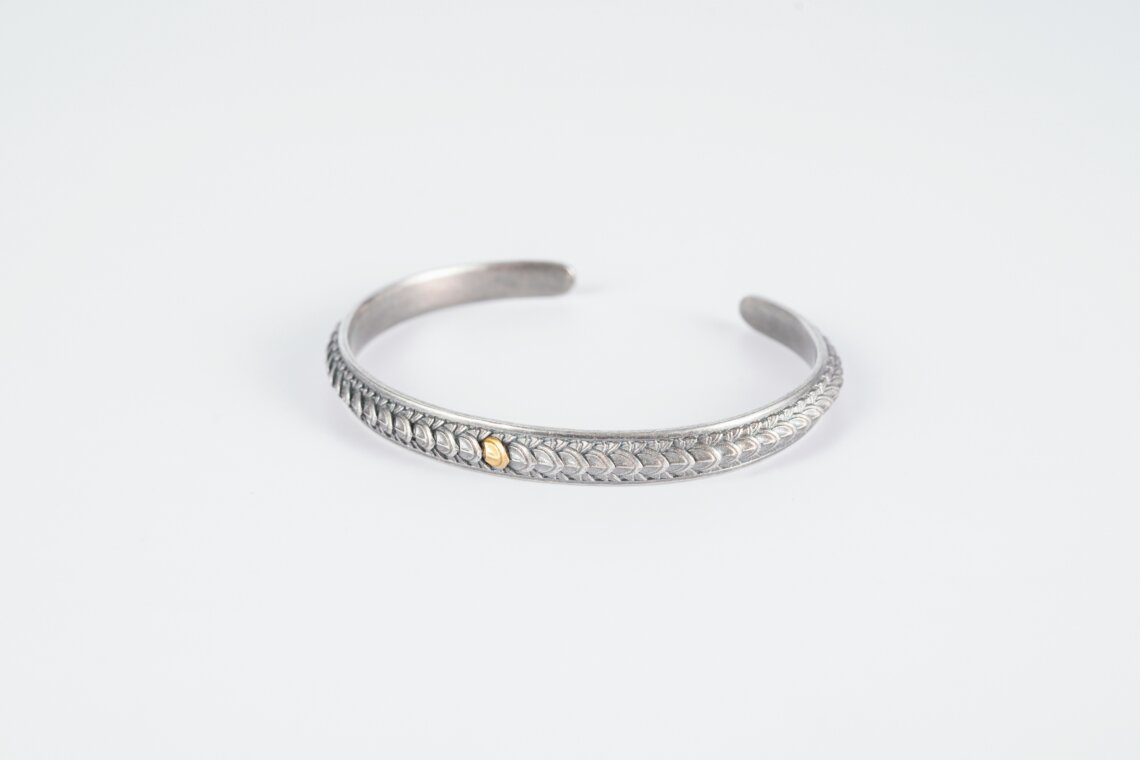
Mixed metals offer another option. Look for a shared feature, such as rounded shapes or similarly smooth finishes, to connect contrasting tones.
Include your sleeve in the comparison. A patterned cuff brings its own colours and shapes into view; a plain sleeve leaves more room for detail at the wrist. Check the jewellery against the clothes you intend to wear before introducing another accent.
Give width and texture different jobs
Beside a broad woven band, a fine chain introduces a narrower line. A smooth bangle offers a contrast in surface instead. Try one change at a time so you can judge what each piece contributes.
Watch how the shapes sit together. Two large motifs might compete for attention or cover one another as you turn your wrist. Moving one bracelet to the opposite arm can give both designs space.
Treat bracelet count as a result, rather than a target. Compare a pair before adding anything else. A broad band with elaborate metalwork may already have plenty of visual presence alongside a single narrow bracelet.
Try two combinations using pieces you own
Use these imagined combinations as starting points, adapting the colours and shapes to jewellery you own.
Imagine a navy woven wristband with a silver-coloured panel. A fine chain in a similar metal tone repeats the panel’s colour, while its open links contrast with the denser fabric. For a fuller arrangement, try a slim, undecorated bangle next. Keep it only if it contributes a distinct shape without crowding the panel. Beside a patterned sleeve, the original pair might be enough.
Now picture a brown fabric band with bronze-coloured detail. A narrow gold-coloured bangle introduces another warm tone. Compare them in daylight, looking at how the colours relate rather than searching for an exact match.
For a mixed-metal alternative, replace that bangle with a fine two-tone chain. Swapping rather than adding lets you compare two arrangements around the same band.
Check the arrangement before adding more
Put on the bracelets and move your wrist normally. Rest your arm on a desk, turn your hand and draw your sleeve over the stack. Look for pieces catching, repeatedly overlapping or slipping across the detail you wanted to show.
If the arrangement feels crowded, remove the piece that competes most strongly with the band. Compare the result before replacing it. If removing it reveals the band’s panel or separates two competing motifs, leave it out.
Follow each maker’s wear guidance when combining accessories, particularly where finishes or components will touch repeatedly. Appearance alone cannot establish compatibility, and fabric should not be treated as a protective barrier between neighbouring pieces.
Keep the detail you chose at the outset visible, retain the colour or texture connection you like, and stop when the arrangement works. A pair can be a finished stack.
Read more fashion and jewelry articles at ClichéMag.com
Images provided by Deposit Photos, BingAI, Adobe Stock, Unsplash, Pexels, Pixabay Freepik, & Creative Commons. Other images might be provided with permission by their respective copyright holders including AI generators.