
Last Updated on September 2, 2026 by Cliche
A workplace injury rarely just affects one thing. You might hurt your shoulder lifting something at the wrong angle, strain your back during a long shift, or develop wrist pain that creeps up slowly over months of repetitive work. But the ripple effects go further than the physical injury itself. Suddenly, ordinary movements feel uncertain. Getting dressed, carrying groceries, or sleeping comfortably can all become unexpectedly difficult. And then there’s the question that sits quietly in the back of your mind: When am I actually going to be able to go back?
That question and the road to answering it is where physiotherapy can make a meaningful difference.
Recovery Is About More Than Waiting for the Pain to Fade
One of the most common misconceptions about recovering from a work-related injury is that recovery happens when the pain stops. In reality, pain relief and functional recovery are two different things, and they don’t always arrive at the same time.
You might feel significantly less discomfort after a few weeks of rest, but still notice that you can’t turn your head fully, reach overhead without hesitation, or stand for more than an hour without stiffness returning. For someone whose job involves repetitive lifting, extended standing, or precise hand movements, these gaps between “feeling better” and “being ready” can be significant.
Physiotherapy is designed to address that gap. Rather than focusing solely on symptom management, rehabilitation targets the underlying physical limitations, reduced range of motion, muscle weakness, movement compensations, or joint stiffness that can persist even after acute pain has settled. This functional approach to recovery is what makes structured physiotherapy genuinely useful for injured workers, not just as a pain management tool, but as preparation for getting back to real life.
What Physiotherapy Actually Works On
The specific techniques used in physiotherapy for workplace injuries will vary depending on the type and severity of the injury, the individual’s baseline fitness, and their rehabilitation goals. But broadly speaking, physiotherapy for work-related conditions tends to address several interconnected areas.
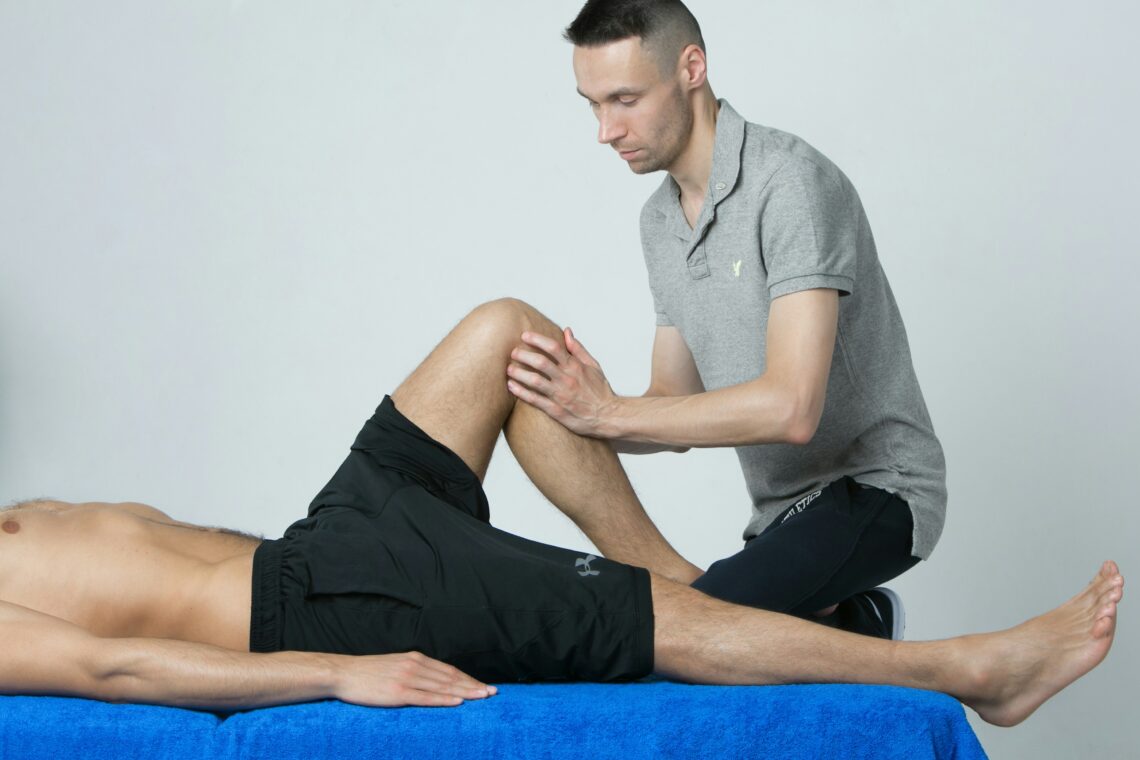
Mobility and range of motion are often among the first priorities. After an injury, the body naturally guards the affected area limiting movement to protect tissue. While this response is protective in the short term, prolonged guarding can lead to stiffness, muscle imbalances, and compensatory movement patterns that create secondary problems. Targeted exercises and, where appropriate, manual therapy techniques can help restore more normal movement progressively.
Strength and physical capacity matter enormously for workers returning to physically demanding roles. An injured muscle or joint that hasn’t been progressively loaded during rehabilitation may still be functionally weak even if it no longer hurts. Building strength through appropriate exercise is not about pushing through pain, it’s about restoring the body’s capacity to handle the demands it will face at work.
Flexibility and tissue quality are often addressed alongside strength, particularly for repetitive strain injuries or conditions involving tendons, muscles, or connective tissue.
And then there’s something that doesn’t get nearly enough attention in most articles on this topic: confidence. Many people who have experienced a significant injury develop a fear of re-injury sometimes called kinesiophobia that can genuinely slow their return to work and their return to normal life. A physiotherapist who understands this can incorporate gradual, progressive exposure to feared movements, helping to rebuild not just physical capacity but the confidence to use it.
Rehabilitation That Reflects the Reality of the Job
Not all workplace injuries are the same, and not all jobs make the same demands on the body. This is why individualized rehabilitation planning matters so much in occupational injury recovery.
Someone who works at a desk and primarily uses a computer has different physical requirements than a nurse who spends a shift on their feet, repositioning patients. A construction worker who carries materials, climbs ladders, and operates machinery needs a rehabilitation program that prepares their body for those specific physical demands, not a generic exercise plan.
Physiotherapists working with injured workers will often consider the physical components of a person’s job: how much standing, walking, or sitting is required; what kinds of lifting or carrying are involved; whether repetitive motions are part of the daily routine; and what postural demands come with the role. This information shapes the treatment plan and helps set realistic, job-relevant goals for rehabilitation.
In some cases, physiotherapy may also include work simulation activities exercises that replicate specific job tasks in a controlled environment to help bridge the gap between clinic-based recovery and real-world job performance. This kind of targeted conditioning is one of the more valuable but underutilized aspects of occupational physiotherapy, and it’s something that sets purpose-built workplace injury rehabilitation programs apart from general musculoskeletal care.
For individuals seeking this level of specialized, individualized support, clinics that focus specifically on this population such as Medical Grade Physiotherapy & Wellness are designed with these nuances in mind, rather than offering a one-size-fits-all approach to rehabilitation.
Preparing for a Safe Return to Work
The phrase “return to work” can feel like a finish line. But in practice, it’s more useful to think of it as a transition one that benefits from preparation rather than a sudden leap back to full duties.
A gradual return to work is often the most appropriate approach following a significant injury. This might look like starting with reduced hours, modified tasks, or lighter physical demands before progressing back to full pre-injury duties. The goal is not to limit what someone can do, it’s to allow healing tissue to adapt progressively and to reduce the risk of re-injury during that vulnerable transition period.
Physiotherapists often play a role in assessing what a person is functionally able to do at a given point in recovery. This might involve a functional abilities evaluation, a structured assessment of how the body performs specific physical tasks which can provide useful, objective information for both the worker and their employer as they plan a suitable return.
Work restrictions, when they’re recommended, are not a sign that something has gone wrong. They’re a way of protecting both the recovery and the person. Modified duties, lighter tasks, different roles temporarily, reduced hours can allow someone to remain connected to their workplace and their professional routine while their body continues to rebuild.
Communication between the worker, their physiotherapist, and the employer is an important part of this process. When all parties understand the current functional abilities and the recovery trajectory, planning a return that is safe, realistic, and sustainable becomes much more achievable.
The Role of WSIB in Ontario
For workers in Ontario, the Workplace Safety and Insurance Board (WSIB) provides coverage for healthcare services including physiotherapy following an approved workplace injury claim. This means that many injured Ontario workers can access structured physiotherapy rehabilitation without the financial burden of paying out of pocket.
Understanding what’s available through your WSIB claim can make a real difference to how quickly and effectively recovery begins. According to WSIB’s 2024 Annual Report, 87.5% of injured workers returned to work within three months, an outcome that is meaningfully supported by early access to appropriate rehabilitation.
For workers navigating this process, there are established wsib physio services for injured workers to recover safely that can help coordinate care, manage the documentation process, and keep recovery on track from the very first appointment. Choosing a clinic that is experienced with WSIB claims means less administrative stress during an already difficult time, and treatment that is aligned with both your recovery needs and the reporting requirements of your claim.
It’s worth knowing that in Ontario, you can go directly to a WSIB-registered physiotherapist without waiting for a referral from your family doctor which means treatment can often begin much sooner than many people realize.
Recovery Doesn’t Stop at the Clinic Door
One aspect of physiotherapy that is easy to underestimate is the role of what happens outside of scheduled appointments. Home exercise programs, movement habits, and the choices made between sessions all contribute meaningfully to how well and how quickly recovery progresses.
This doesn’t mean working through pain or pushing the body harder than it’s ready for. It means staying engaged with the rehabilitation process doing the exercises your physiotherapist has recommended, avoiding prolonged inactivity that can slow healing, and paying attention to how your body responds as demands gradually increase.
Progressive strength building, in particular, takes time. Tissue adaptations happen over weeks, not days. The work done consistently between sessions is often what separates a smooth recovery from one that plateaus or stalls.
Physiotherapists will generally provide guidance on what to do, how often, and how to tell if something needs to be dialed back. Following that guidance closely, and communicating openly when something isn’t working as expected, helps keep rehabilitation moving in the right direction.
When to Seek Professional Support
If you’ve been injured at work and haven’t yet accessed physiotherapy, it’s worth considering sooner rather than later. Early rehabilitation before movement patterns become compensatory and muscle function deteriorates significantly tends to support better outcomes. This doesn’t mean rushing recovery; it means engaging with it actively.
Signs that professional physiotherapy support may be appropriate include: persistent pain that isn’t clearly improving, stiffness or reduced movement in the affected area, weakness or difficulty completing tasks that were previously manageable, or a sense of uncertainty about what you should and shouldn’t be doing during recovery.
Recovery from a workplace injury is rarely linear. There will be better days and harder ones. But with the right support, a clear rehabilitation plan, and realistic expectations about the process, returning to work and to the daily routines that matter most is a goal that most injured workers can work toward meaningfully.
Recovery looks different for everyone, and the timeline and approach that’s right for you will depend on the nature of your injury, your job requirements, and your individual circumstances. If you’re recovering from a work-related injury, speaking with a qualified physiotherapist is the best first step toward understanding your options.
Read more health articles at ClichéMag.com
Images provided by Deposit Photos, BingAI, Adobe Stock, Unsplash, Pexels, Pixabay Freepik, & Creative Commons. Other images might be provided with permission by their respective copyright holders including AI generators.