
Last Updated on May 21, 2026 by Cliche
Have you ever wondered why diamond stud earrings appear in so many jewelry collections, from first birthday gifts to wedding day accessories to retirement presents?
There’s something about them that other earrings don’t quite replicate. They’re not the most dramatic option. They’re not the flashiest. But they have a quality of rightness that makes them the earring most people reach for across more occasions than any other style.
Here’s what actually makes them different and why that difference matters.
The Design Is Deliberately Simple
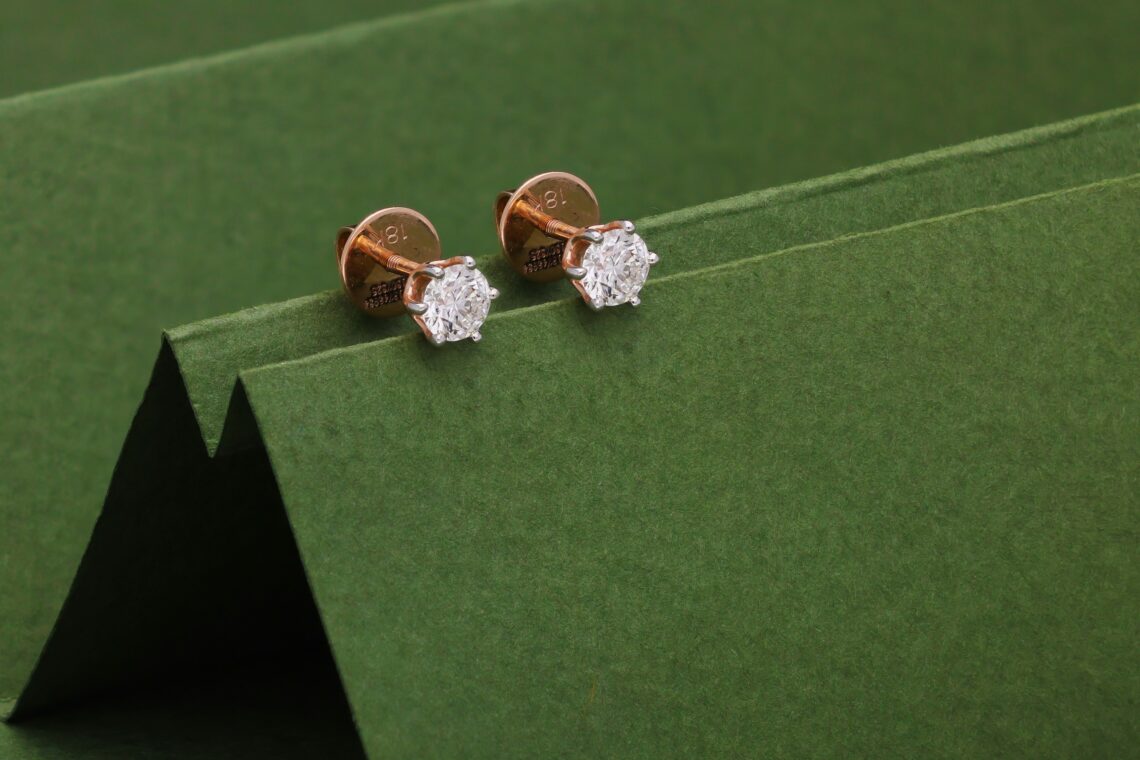
Most earring styles make a statement. Chandelier earrings cascade. Hoops frame the face with movement. Drop earrings draw the eye downward. Diamond studs do something different; they add brilliance without adding complexity. The design is a single diamond, set close to the earlobe, in a setting that holds it securely and presents it at its best.
That simplicity is a design choice with significant consequences. Because there are no additional elements competing for attention, the diamond itself becomes the entire focal point. The light it catches, the sparkle it produces, and the way it changes with movement, all of it is visible without distraction. No earring style showcases a diamond more directly than a stud.
1. They Complement Everything Rather Than Competing With It
Diamond studs stand out for one simple reason: they work with almost everything. Unlike more decorative styles, they don’t compete with the rest of your look; they complement it.
- Pair easily with formal, business, and casual outfits
- Don’t clash with necklaces or other statement pieces
- Work with different hairstyles, including updos
- Add brightness without overwhelming the look
- Suitable for both everyday wear and special occasions
This kind of versatility becomes clear over time. Even in collections with more dramatic pieces, diamond studs tend to be the ones worn most often because they fit naturally into almost any setting.
2. They Retain Value in Ways That Fashion Jewellery Doesn’t
Fashion jewelry tends to follow trends, shifting in style from season to season. Diamond studs are different. Their appeal isn’t tied to a particular look or era but to the natural brilliance and simplicity of the stone itself. That’s why the design has remained relevant for generations and continues to feel appropriate in any setting.
This lasting relevance also influences how they’re made. Diamond stud earrings are designed to be worn consistently over time, rather than replaced as styles change.
Ritani follows this approach with a focus on clean design and reliable quality, creating pieces meant to be worn regularly and kept as part of a long-term collection.
3. The Diamond’s Quality Determines Everything
In most earring styles, the setting and design play a major role. In diamond studs, the diamond itself does almost all the work. The cut affects how it reflects light; clarity influences how clean it looks; color determines its tone, and carat weight affects how noticeable it is on the ear.
This makes quality more important than size. A smaller, well-cut diamond will often appear brighter and more appealing than a larger one with a poor cut. For diamond studs, where there’s little else to draw attention, choosing quality, especially cut, makes the biggest difference in how the earrings look in everyday wear.
Cut is the most important factor in how a diamond performs visually. It determines how much light the stone reflects and how brilliant it appears, with better-cut diamonds showing noticeably more sparkle than those of the same size and clarity. For diamond studs, where the diamond is the focus of the design, cut quality becomes the most important factor in how the earrings look in everyday wear.
4. The Setting Affects Both Security and Appearance
Diamond studs come in several setting styles, each affecting how the diamond sits, how secure it is, and how it appears on the ear.
Prong settings — the most classic option, using metal claws to hold the diamond. Typically four or six prongs. Maximum light entry and sparkle, but slightly more vulnerable than enclosed settings
Bezel settings — the diamond is surrounded by a continuous metal rim. More secure, slightly lower profile, and a more modern aesthetic
Martini settings — a three-prong setting with a low, tapered profile that sits flush against the earlobe. Clean and contemporary
Halo settings — a centre diamond surrounded by smaller pavé diamonds. More dramatic than a solitaire stud while maintaining the compact form factor
The right setting depends on lifestyle, personal style, and the size of the centre diamond. For active wearers, bezel settings offer additional security. For those prioritizing sparkle, prong settings maximize light return.
5. They Work at Every Price Point Without Sacrificing the Essential Quality
Diamond studs are available at a wide range of price points. From natural diamonds to lab-grown options that offer similar visual quality at a lower cost and smaller stones in simple settings, the core appeal remains the same. The brilliance, simplicity, and versatility of diamond studs don’t depend on a high budget.
This makes them more accessible than many other fine jewelry styles. You don’t need a large investment to achieve the look. A well-chosen pair at a modest price point often delivers more value and wearability than spending significantly more on a more complex or trend-driven design.
Final Thoughts
Diamond stud earrings stand apart because they combine real brilliance, complete versatility, and a timeless design in a way no other style quite does. They may not be the boldest piece in a collection, but they’re the ones that fit every setting, every outfit, and every occasion without effort.
Over time, they become the most worn and most relied upon. That consistency, not just how they look but how often they’re chosen, is what ultimately makes them more valuable than more dramatic alternatives.
Read more fashion and jewelry articles at ClichéMag.com
Images provided by Deposit Photos, BingAI, Adobe Stock, Unsplash, Pexels, Pixabay Freepik, & Creative Commons. Other images might be provided with permission by their respective copyright holders.