
Last Updated on August 28, 2026 by Cliche
A truly functional dining area comes down to how well layout, lighting, table choice, and seating comfort work together. Thoughtful decisions about your table, Dining chairs, lighting, and storage all contribute to a space that handles everyday meals with ease and still rises to the occasion for larger gatherings. Getting these elements to work in concert—rather than obsessing over one piece in isolation—is what separates a dining room that merely looks nice from one people actually want to linger in.
Why Your Dining Space Design Matters
The dining area rarely serves just one purpose. It’s where homework gets done, where laptops open up during morning coffee, and where holidays unfold around a table crowded with family. Good design here is about comfort, movement, and connection, not just aesthetics. Anyone who’s bumped a chair into a wall or squinted under harsh overhead light knows exactly how fast poor planning can derail a meal. A well-designed dining space should feel comfortable every day and still hold up when the room is full.
Understanding How You Use Your Dining Space
Before you start choosing furniture, get clear on function. Does your household host big dinners a few times a year, or does the table mostly see quick weekday meals and homework sessions? Think about how many people typically sit down together and what else happens at that table besides eating. The answers to these questions shape everything from table size to seating style to storage needs.
Key Takeaway: Design decisions come together more easily—and more successfully—when you start with how your household actually uses the dining space, rather than how you simply want it to look.
Planning Layout and Movement Around the Table
Circulation space matters more than most people realize. Aim for roughly 36 inches of clearance between the table’s edge and any walls or large furniture nearby, giving everyone room to push back their chair and walk past without a squeeze. A simple way to test this: outline the table and chair footprint with painter’s tape, then walk through the space as you would during an actual meal.
- Check door swing and pathways.
- Make sure chairs can be pulled all the way out.
- Confirm that walkways to the kitchen stay clear.
Choosing Seating for Comfort: Ergonomics and Everyday Use
Comfortable seating comes down to support, proportion, and posture. Seat height should relate naturally to the table’s height, and seat depth needs to support the back without feeling oversized. Upholstered seating tends to feel better through long meals, while benches can be a smart way to maximize flexible seating in tighter spaces. Comfortable seating is what encourages people to linger, connect, and actually enjoy the meal in front of them.
Practical Tip: Measure your existing table’s height and compare it against recommended seat heights before buying new chairs—it’s a quick way to sidestep an awkward mismatch.
Balancing Table Shape, Size, and Seating Capacity
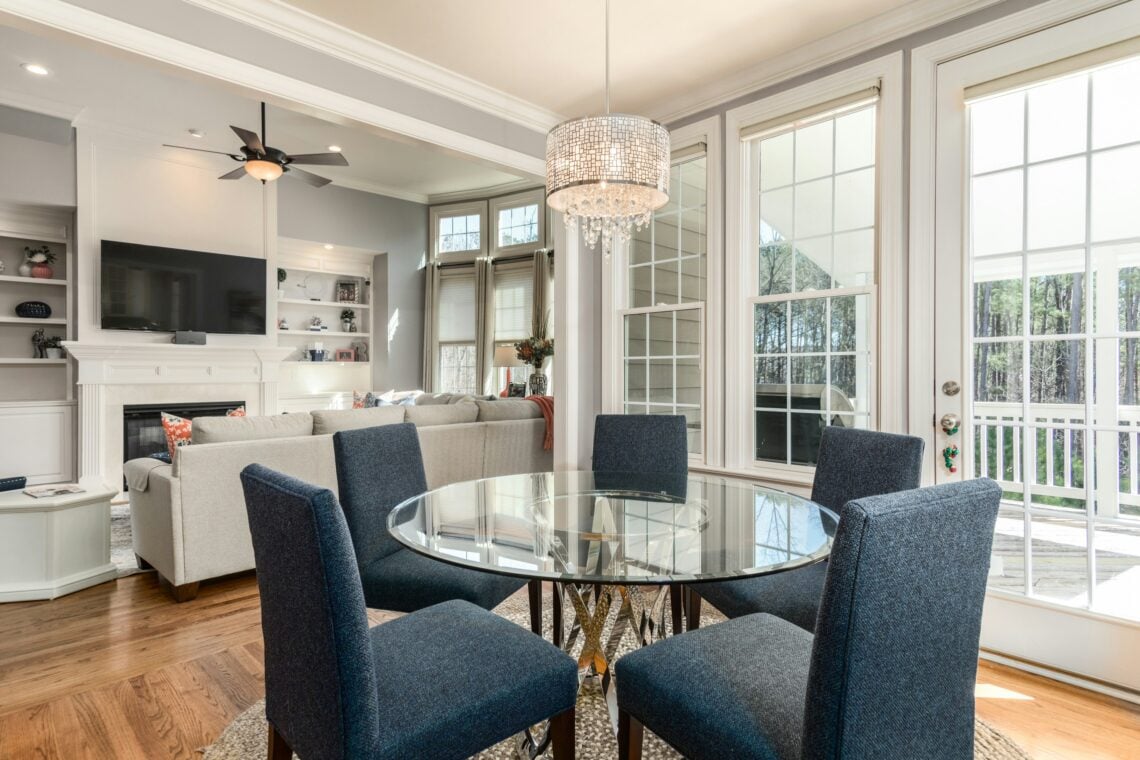
Rectangular tables suit narrow rooms well and offer more flexibility in how you arrange seating, while round or oval tables fit nicely into tighter corners and tend to encourage conversation. It helps to think in terms of comfortable capacity—the number of people who can sit without feeling cramped—as distinct from the maximum you could technically squeeze in for a special occasion.
Lighting and Atmosphere: Making Meals Feel Welcoming
Layered lighting supports both function and mood. A fixture centered above the table handles task lighting, while ambient sources soften the room for evening meals. Dimmers add a welcome bit of flexibility.
- Over-table lighting
- Ambient room lighting
- Accent lighting for shelves or sideboards
Keep fixtures at a height that avoids glare and never gets in the way of movement around the table.
Storage, Rugs, and Additional Elements That Support Daily Life
Sideboards and cabinets keep dishware within reach without letting it clutter the table itself. Choose storage that solves a real problem, not just fills a wall. A rug placed under the table can visually anchor the dining zone in open-plan homes, but it needs to be large enough that chairs stay on it even when pulled back, and made from a material that’s easy to clean.
Bringing It All Together: Creating a Space People Want to Use
Start with function, plan the layout before you shop for furniture, prioritize seating comfort, and let lighting and storage support daily life rather than compete with it. Small adjustments—rearranging for better flow, softening the lighting, reconsidering chair height—often make a noticeable difference without requiring a full redesign.
When your dining space supports comfort, movement, and meaningful connection, it naturally becomes one of the most valued rooms in your home.
Read more home decor articles at ClichéMag.com
Images provided by Deposit Photos, BingAI, Adobe Stock, Unsplash, Pexels, Pixabay Freepik, & Creative Commons. Other images might be provided with permission by their respective copyright holders including AI generators.