
Last Updated on April 22, 2026 by Cliche
Morocco looks effortless on a mood board and impossible in a suitcase. One day you are photographing cobalt doors in Chefchaouen, the next you are climbing a sand dune at sunrise, and by evening you are sipping mint tea on a Marrakech rooftop where the dress code sits somewhere between bohemian and black-tie. Most travelers respond by overpacking, arriving with three versions of every outfit and still feeling underdressed for dinner.
Fashion editors solve this differently. They build a capsule that photographs beautifully, respects local culture, and handles a 40-degree temperature swing without needing a second checked bag.
If you are planning one of the curated Morocco Travel packages that move between imperial cities, coastal towns, and the desert, the way you pack will quietly determine how the entire trip feels on camera and on foot. This guide walks through the editorial approach to a Moroccan wardrobe, piece by piece.
Start With the Climate You Are Actually Visiting
Morocco is not one climate. It is at least four, often in the same week.
Marrakech and Fez run hot and dry through most of the year, with cool evenings that catch visitors off guard. The Atlas Mountains drop sharply in temperature once you gain elevation, and spring snow is not unusual on higher passes.
The Sahara swings from blistering afternoons to genuinely cold nights, sometimes by thirty degrees or more. Coastal cities like Essaouira and Casablanca stay mild but windy, with a humidity that changes how fabrics drape.
Before you pack a single item, map your itinerary against these zones. A five-day Marrakech trip calls for a very different suitcase than a ten-day loop that includes desert camping and a stop in the Rif.
The Editor’s Capsule: What Actually Earns Its Place
Editors pack in outfits, not items. Every piece should work in at least three combinations, photograph well in natural light, and survive a long travel day without looking tired.
A well-edited Morocco capsule typically includes:
- Two breathable midi or maxi dresses in linen, cotton, or silk blends. Neutral or earth-toned bases read beautifully against Moroccan architecture and respect modesty norms in more traditional areas.
- One pair of tailored wide-leg trousers that transition from medina walks to dinner at a riad.
- Two lightweight button-down shirts, one white and one in a warm neutral like camel or rust. These layer over swimwear, tuck into trousers, and double as sun protection.
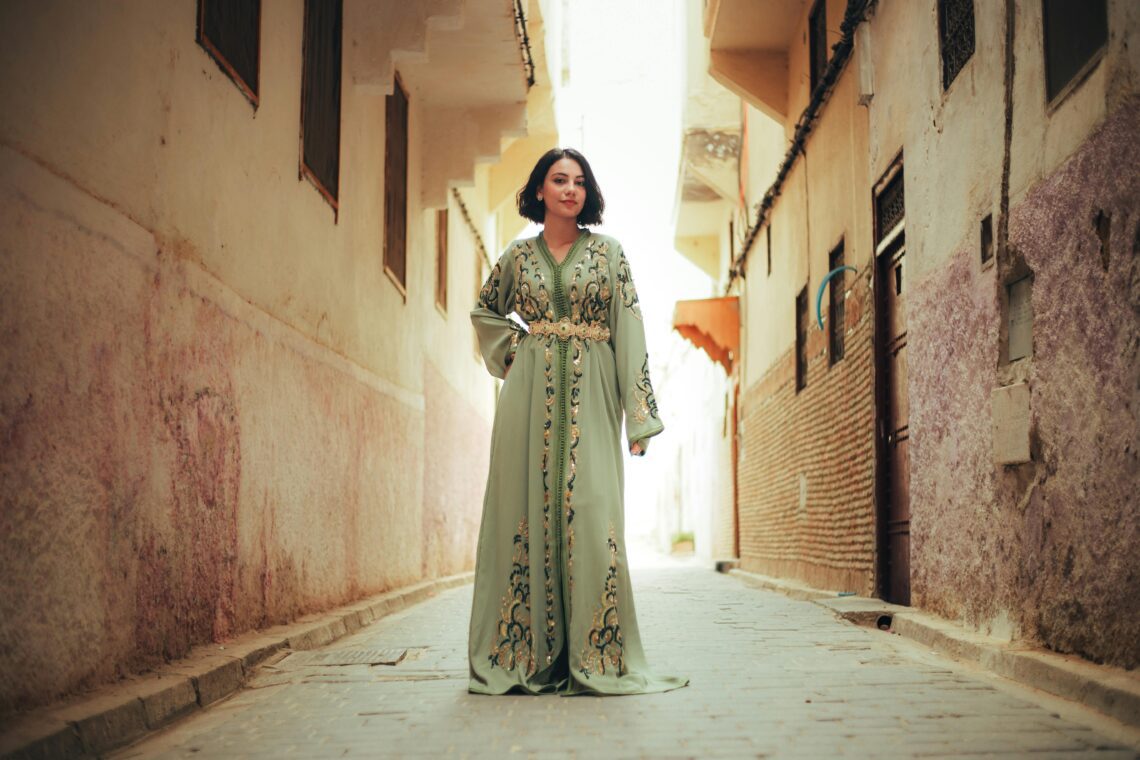
- A structured kaftan or long duster coat for cooler evenings and more polished dinners. This is the piece that does the heaviest styling work.
- One pair of dark denim, slim or straight cut, for travel days and cooler cities.
- A cashmere or merino wool wrap, which handles desert nights, overly air-conditioned restaurants, and plane cabins without taking up space.
Leave the trend pieces at home. Morocco’s own palette, texture, and light are the story. Your wardrobe is the frame.
Footwear: The One Place Most Travelers Get Wrong
Cobblestones, sand, tile, marble, mountain paths. The terrain changes constantly, and thin-soled sandals that look perfect on Pinterest will betray you by day two.
Pack three pairs, no more. A broken-in pair of leather sneakers or low-profile walking shoes for long medina days. A pair of flat leather sandals or mules for warmer afternoons and relaxed dinners.
One elevated option, a block-heeled sandal or embellished flat, for evenings where you want something more considered. If your itinerary includes desert excursions or hiking in the Atlas, add closed-toe trail shoes, ideally ones you already trust.
A tip from editors who travel for shoots: buy your pair of Moroccan babouches or raffia slides once you arrive. They are inexpensive, locally made, and instantly elevate resort photographs.
Accessories Do the Styling Work
A tight clothing edit only works if accessories carry their weight. This is where Morocco actually rewards you, because the souks are full of pieces that will extend your wardrobe the moment you unpack.
Bring a wide-brimmed hat that packs flat, oversized sunglasses, and a lightweight scarf in silk or cotton that can cover your head in religious sites, shield your shoulders from the sun, or restyle an outfit for dinner. A small crossbody bag with a secure closure handles daytime. A structured clutch or mini top-handle works for evenings.
Jewelry should stay minimal on arrival and grow throughout the trip. Moroccan silver, hand-stamped Berber pieces, and hammered brass cuffs are some of the most photographed souvenirs for a reason.
Building your look through the journey is part of the experience, and most thoughtfully designed Morocco trip packages include artisan visits where you can source directly from makers rather than tourist-facing stalls.
Dressing Respectfully Without Dressing Down
Morocco is a Muslim-majority country, and while tourist areas are generally relaxed, dressing with awareness makes you a better-received guest and, frankly, a better-photographed one. Locals notice effort, and that shifts how you are treated in shops, restaurants, and private homes.
Cover shoulders and knees in medinas, religious sites, and smaller towns. Loose silhouettes read as both respectful and editorial, which is why linen sets and floor-length dresses tend to dominate travel features from the region. Save shorter hemlines, strappy tops, and swimwear for hotel pools, private riads, and coastal resorts where the context is clearly different.
Modesty and style are not opposites here. The Moroccan aesthetic itself, from the kaftan to the djellaba, is built around coverage and drape. Lean into it.
The Practical Layer Most Guides Skip
Beautiful packing means nothing if your suitcase arrives wrinkled, your phone dies at a viewpoint, or you cannot find your passport at a checkpoint.
A soft-sided carry-on with compression cubes will outperform a hard shell on uneven road stairs and narrow medina alleys. A compact steamer is worth the space for anyone planning dinner photographs. A universal adapter, a high-capacity portable charger, and a crossbody with an RFID pocket handle the logistics that travel content rarely shows but every editor quietly manages.
Pack a small fabric pouch specifically for textile purchases. You will buy more than you planned, and folding a vintage rug or embroidered cushion cover into its own bag keeps the rest of your suitcase clean on the flight home.
The Final Edit
The night before you leave, lay out every outfit from arrival to departure. Photograph each one. If a piece does not appear in at least three photographs, remove it. If a photograph looks flat, add one accessory, never two.
This is how editors pack, and it is why their trips look considered rather than costumed. Morocco gives you extraordinary backdrops. Your job is simply to show up prepared, in pieces that let the country do what it does best.
Read more fashion articles at ClichéMag.com
Images provided by Deposit Photos, BingAI, Adobe Stock, Unsplash, Pexels, Pixabay Freepik, & Creative Commons. Other images might be provided with permission by their respective copyright holders.