
Last Updated on April 27, 2026 by Cliche
While seemingly benign, water can in fact be one of the most destructive elements to a whole host of different kinds of premises. Whether that’s by destroying concrete, rusting metal or rotting wood, left unchecked, water can result in immensely expensive issues.
One of the most effective solutions against water damage is to use some kind of commercial waterproofing service. From assessing your waterproofing needs to applying the actual coating, here’s how that process works.
Assessing needs
The first practical step in any commercial waterproofing project is to assess the waterproofing needs of the premises in question.
There are a range of different options available for the actual waterproofing itself, from multi-layered coatings to liquid rubber roof coatings, and it’s important that you choose the right option for your needs.
The assessment will consider questions such as what the building, carpark or other premises are being used for and the material that the coating is being placed on.
Identifying a product + provider
Once you know your waterproofing needs (sealing the top of a multi-story carpark, for example), you can choose a service provider and product.
It’s important to go with a provider that has similar experience with projects like yours.
A company like ACS Coatings, with hundreds or even thousands of projects under its belt, will be far more likely to provide an exemplary service that you can depend on compared to a new outfit with the newest equipment but little operational experience.
Cleaning + surface preparation
Before a coating can be applied, the surface on which it’s being placed will need to be prepared. Failure to take care of this stage in the process can lead to premature failure, often as a result of poor adhesion.
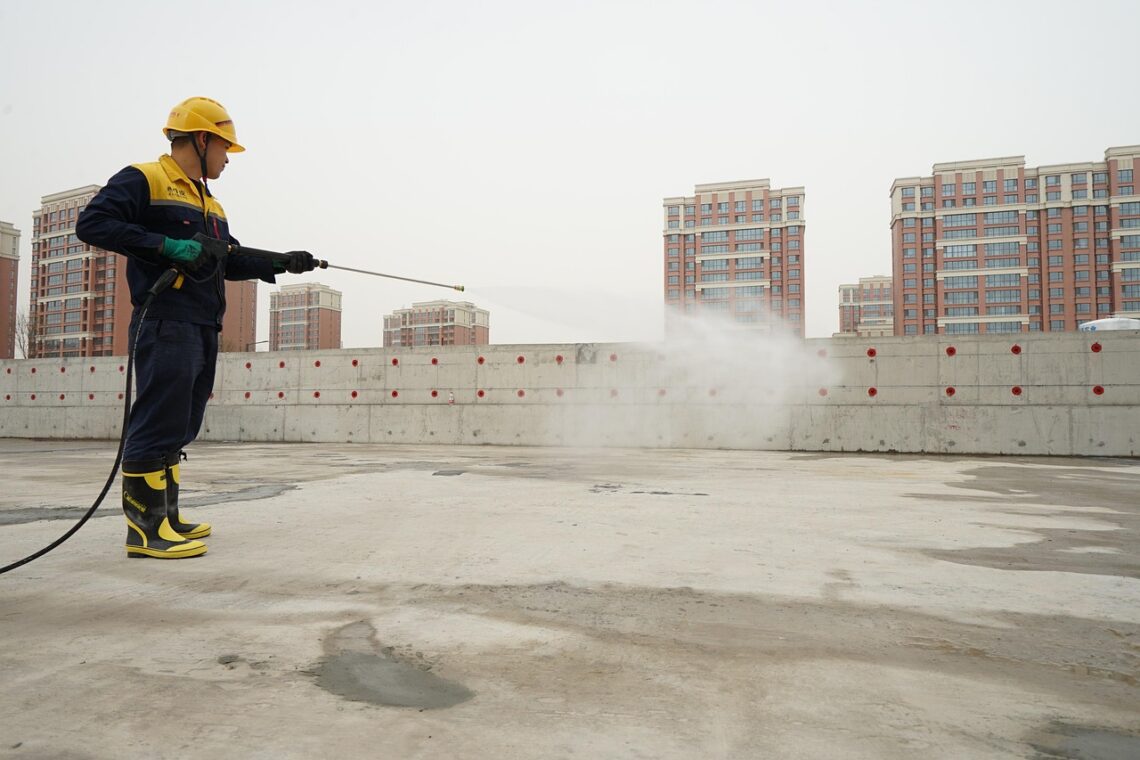
It could be that the surface just needs brushing and spraying with a power washer, but it could also be the case that additional work is required to ensure the structural integrity of the surface.
Either way, cutting corners here will be sure to cost you dearly later on.
Priming
Once the surface is both clean and structurally sound, you can prime it so that it’s ready to apply the coating. Depending on whether the substrate is metal, wood or concrete, you’ll want to choose either an epoxy or acrylic primer.
Applying the coating
Finally, the waterproof coating can be applied. There are a range of options to choose from, from sheet membranes to spray-on membranes.
Different options will have different strengths and weaknesses, and it’s important that you use a provider who has a thorough understanding of the various options.
Some options will need to be applied with heat, while others will be naturally pliable and cure on their own.
Commercial waterproofing solutions are a critical aspect of preventative maintenance in a range of different settings, and it’s important that you get it taken care of sooner rather than later. Just a single season’s worth of rain can result in tens of thousands of pounds in repair costs, and it’s an easily avoidable problem if you act soon enough.
Read more lifestyle articles at ClichéMag.com
Images provided by Deposit Photos, BingAI, Adobe Stock, Unsplash, Pexels, Pixabay Freepik, & Creative Commons. Other images might be provided with permission by their respective copyright holders.