A wedding veil can transform how a bride looks and feels. It changes how light hits the gown, how the face is framed, and how the whole look moves.
Many brides overlook it, but the right veil completes the dress and brings the look together. Keep reading to learn how to choose the perfect wedding veil.
Start With the Dress Silhouette
A wedding dress creates the foundation for the entire look. The veil should echo that shape or balance it out.
- Ball gowns and full skirts need longer lengths typically found on chapel or cathedral veils. They add harmony and flow.
- Slim or minimalist dresses suit fingertip or ballet-length veils. They soften the outline without overwhelming it.
Consider consulting designers like Madame Tulle Bridal Veils. Brides can visit a reputable studio to try different veil styles in a warm, intimate setting. Appointments allow brides to move freely and see how each veil complements their dress in person.
Match the Fabric Weight and Texture
Fabric harmony matters more than many brides realize. A heavy satin gown pairs best with a veil that holds some shape. A gossamer tulle veil suits lighter fabrics like chiffon or georgette.
Match textures instead of identical patterns when pairing lace or embellished dresses with veils. A veil with scattered appliqués can mirror lace without duplicating it. The key is creating what designers call ‘fabric dialogue.’ A matte crepe gown with a soft veil reflects light beautifully and feels fresh yet timeless. This approach creates balance within the overall bridal look.
Choose Color and Tone Thoughtfully
White is rarely just white. Many gowns come in ivory, blush, or champagne tones. A wedding veil that matches or gently offsets the gown’s tone brings harmony.
A warm veil over a neutral dress adds depth, while a pale blush veil softens sharp whites. Before deciding, view both the veil and the dress under different lighting. What looks seamless indoors may appear mismatched outdoors.
Subtle tints are also trending. A slightly darker veil near the hem adds depth while staying true to tradition. It’s a quiet way to modernize the look and express personal style.
Highlight the Dress’s Back and Details
The back of the dress deserves attention too. Intricate embroidery, a plunging V, or an open keyhole can vanish under a dense veil. For gowns with intricate details, a single-layer or sheer veil keeps the focus visible.
Some newer veils part naturally or detach to reveal the gown beneath. Think about how the veil interacts with the dress as you walk. Layers of fabric and lace should move as one, not compete for attention. Ceremony photos often show the back view, so plan how the veil frames that angle.
Frame the Face and Fit the Hairstyle
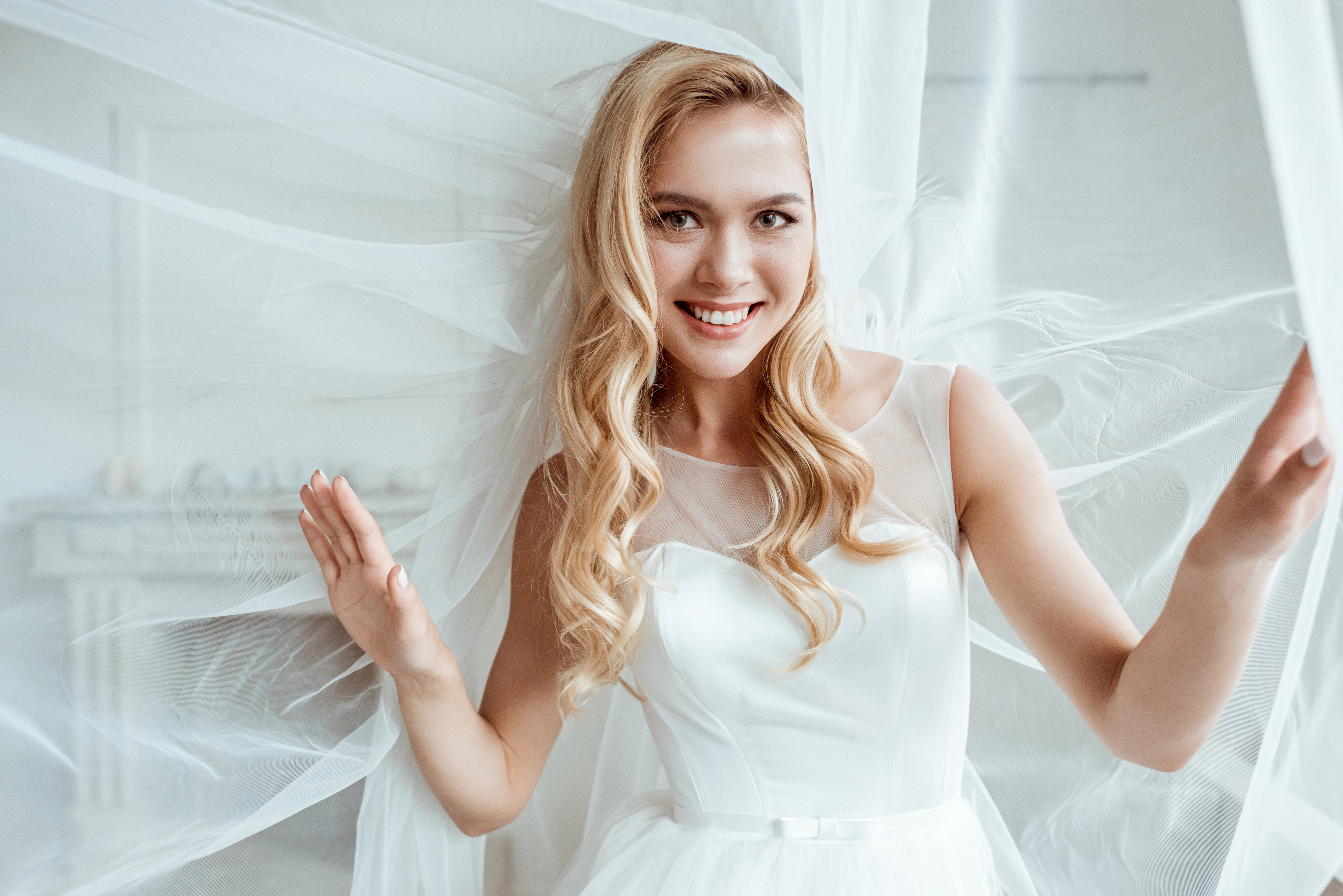
The veil should enhance the face, not hide it. Brides with round or heart-shaped faces suit fingertip or chapel veils that gently lengthen the profile. Long faces benefit from shorter or elbow-length veils that create width.
The wedding hairstyle matters, too. Heavy veils need the support of an updo or structured bun. Lighter veils suit loose curls or half-up styles. The placement of the comb changes the look. Setting it lower on the head or beneath a bun gives a modern, relaxed finish.
A trial fitting with the chosen hairstyle helps test comfort and balance before the big day. This simple step ensures a refined bridal look from every angle.
Select Edging and Embellishments With Intention
Every edge tells a story. Raw-cut veils look soft and ethereal, while ribbon or lace trims feel more formal. Beaded or pearl-dotted edges add movement and sparkle without feeling too heavy.
If the gown already has ornate details, keep the veil simple. A plain dress, on the other hand, can carry a veil with more embellishment. Veil edges also guide the viewer’s eye. Straight hems look crisp, while scalloped ones feel romantic.
The right finish should underline the dress’s character, not change it. Each veil style changes the outfit’s tone, so choose a finish that highlights the wedding gown’s design.
Think Practically About Movement, Venue, and Season
Comfort is as important as beauty. A cathedral-length wedding veil suits grand spaces but can snag easily outdoors. Fingertip or ballet lengths allow easier movement during the reception.
Venue choice also matters. Outdoor weddings need veils with secure combs or small weights to prevent wind lift. Meanwhile, religious venues might require specific lengths for modesty.
Consider the season as well. Multi-layer veils trap warmth, while light tulles move gracefully in summer air. In photos, long veils move dramatically in the breeze, while shorter ones stay polished.
Add a Personal or Sentimental Touch
Many brides personalize their bridal veils to carry meaning. Heirloom lace or embroidered initials can make the piece unique without feeling showy. Some brides sew tiny charms or their wedding date near the comb for a quiet, hidden detail.
A veil often carries emotion from one generation to another. Personal touches turn the veil from a simple wedding accessory into something meaningful. Keep sentiment and style balanced so the veil feels personal yet unified with the dress.
Final Thoughts
A wedding veil should complete the gown, not compete with it. The right pairing flatters the shape, complements the fabric, and unites every element. A thoughtfully chosen veil becomes the final brushstroke that completes the bridal vision.
Read more wedding articles at ClichéMag.com
Images provided by Deposit Photos, BingAI, Adobe Stock, Unsplash, Pexels, Pixabay Freepik, & Creative Commons. Other images might be provided with permission by their respective copyright holders.