
Last Updated on June 2, 2026 by Cliche
Bottle warmers are good devices among parents who desire to warm breast milk or formula within a short time. They are made in such a way that they warm milk gradually and evenly, which will assist in simplifying the process of feeding, particularly late-night feedings or hectic days. Nevertheless, there comes a time when many parents must pose the question: What are the cons of bottle warmers?
What Are the Cons of Bottle Warmers
Bottle warmers are meant to make the feeding easy since they warm milk to a comfortable temperature. They are not, however, always the best solution for every family. Based on the nature of the warmer, parents can experience troubles concerning safety, time-saving, cost, and feasibility.
The conventional bottle warmers usually need a power supply and can take several minutes to warm milk. This is an additional step, which might be inconvenient in hectic circumstances, like traveling, running errands, or feeding the baby at night.
Other parents have also realized that warmers are another gadget that is likely to put an overload on an already crowded kitchen counter. A bottle warmer might not be necessary in case of a shortage of space.
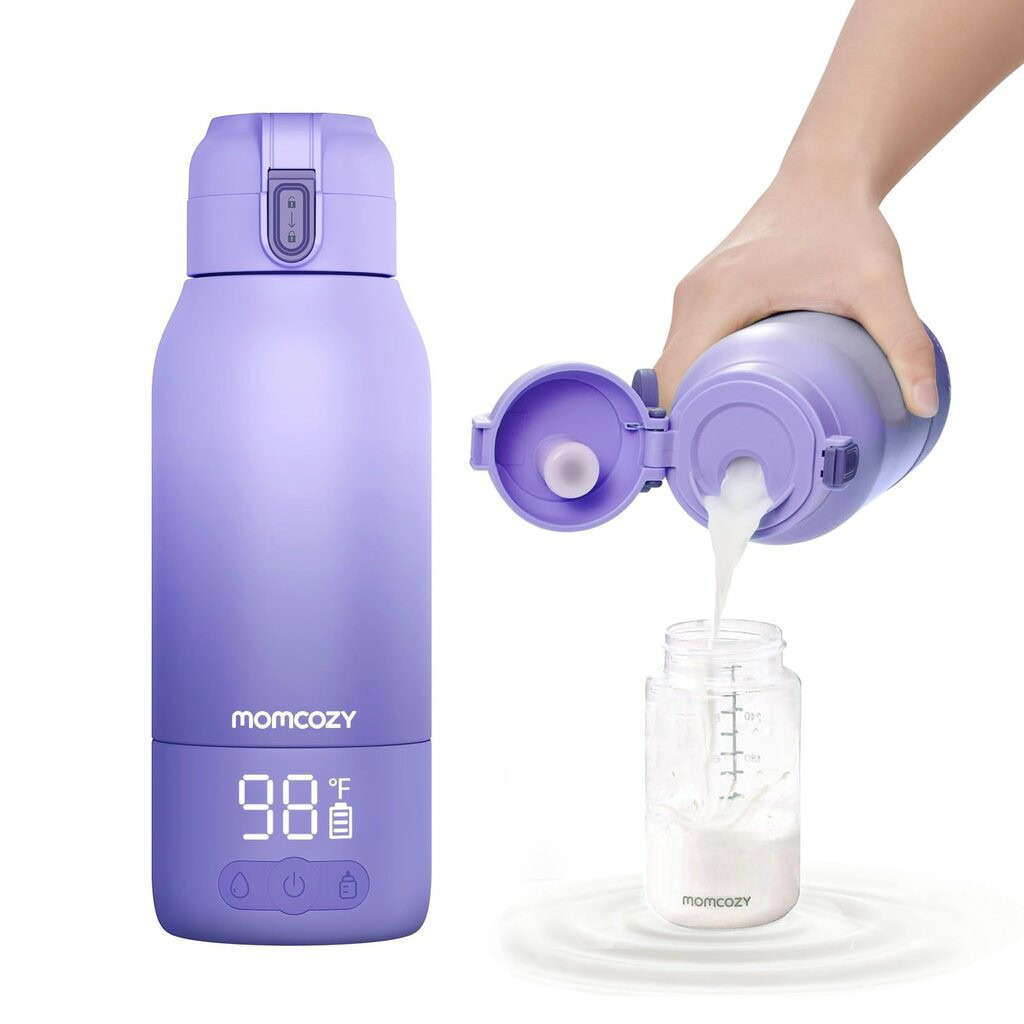
The portable versions, such as the Momcozy cordless bottle warmer, provide a better chance of flexibility as a parent is able to warm milk without necessarily having to be connected to any power source. These portable warmers will be applicable in the automobile,during flights, or outdoors. Among them, the Momcozy Superfast Portable Baby Bottle Warmer for Travel is a particularly highly recommended product.
Potential Safety Risks of Bottle Warmers
One of the most crucial factors when warming milk for babies is safety. Although bottle warmers are meant to warm milk in a gentle manner, there are some instances when they pose safety risks to the user if they are used inappropriately.
Overheating is one of the problems. Certain warmers might overheat milk, and in the process, this could destroy valuable nutrients present in breast milk or cause hot spots,thus burning the mouth of a baby.
Parents should also take care not to leave the bottles in the warmer too long. If the heating process is prolonged, the milk may be subjected to inappropriate temperatures or spoil more quickly than it should.
Another possible issue is the warmers that are water-based. These are heaters that are used to boil bottles with the use of hot water or steam and when not handled appropriately may lead to spillages or small burns.
The parents are expected to adhere to some simple rules to minimize the safety risks:
- Always take the instructions of the manufacturer when using a bottle warmer.
- Before heating the milk, check the temperature.
- Avoid overheating of milk or rewarming the same bottle two or more times.
- Wash the warmer to avoid bacteria accumulation.
Parents can reduce such risks by utilizing warmers correctly and monitoring temperatures to ensure that they are not excessive.
Time and Energy Considerations for Using Warmers
The time that it takes to heat milk is another aspect that parents usually put into consideration when they pose the question, what are the cons of bottle warmers?
Although bottle warmers are supposed to help in the process of making it easier to feed babies, they can still take a couple of minutes to warm up milk to the required temperature. Even a brief delay can be longer during the process of feeding a baby in late-night hours when an infant is crying and in need of food.
There are also some warmers which need to be prepared like adding water or choosing the right temperature option. This additional measure can also make it slow going, particularly among the parents who like easy and quick fixes.
It can also be the use of energy. The conventional warmers are dependent on electricity and therefore they have to be plugged into a power supply. This restricts their usage and can raise energy usage in case of frequent usage.
This can be addressed by the use of portable warmers, although in most cases, these need to be charged. In case the battery runs out due to sudden circumstances, parents will be forced to identify an alternative way of heating milk.
In a family where speed and simplicity are important, such minor wastes of time might seem inconvenient in day-to-day activities.
Cost and Maintenance Drawbacks of Bottle Warmers
Another factor that can be taken into consideration is the cost when comparing bottle warmers. Whereas some models may be cheap, others made of higher quality (particularly portable or cordless warmer) may be costlier. Parents who already have most of the baby products can be reluctant to purchase an additional appliance for their budget.
Maintenance is also significant besides the initial purchase.Most bottle warmers should be cleaned on a regular basis to avoid the formation of minerals due to traces of water or milk. With time, the performance may be affected by lime or residue when the device is not well-washed.
Common maintenance procedures are:
- Descaling the warmer on a regular basis.
- Washing milk spills or spurt.
- Changing worn-out parts where needed.
Other parents will not be comfortable with all this extra maintenance, especially in a situation where they already have a newborn who consumes a lot of time and attention.
A bottle warmer can be an unnecessary and additional expense to families who want to make their lives as easy as possible.
Alternatives to Using a Bottle Warmer
The positive side is that there is no need to rely on the bottle warmers to prepare milk to be given to babies. There are very basic techniques that many parents use, and they are equally effective.
The warm water method is considered to be one of the most widespread options. This is by putting a bottle in water that is warm around a bowl or a cup for several minutes until the milk is at a comfortable temperature. This is a mild technique, and it allows preservation of breast milk nutrients.
The other alternative is taking a thermos of warm water when leaving the house. Parents are able to heat milk by pouring warm water into a container and putting the bottle in it when they need to heat milk. Some babies are content with the room temperature milk; thus, there is no warming necessary at all.
These are basic, cheap and common among parents worldwide.
When a Bottle Warmer May Not Be Necessary
A bottle warmer is useful, but not important to many families.
In case a baby is able to drink room-temperature milk, then parents might discover that there is nothing like warming bottles. This may facilitate feeding, which is faster and easier particularly at night feeds.
Bottle warmers also can be less significant to parents who are constantly on the move. Simple solutions such as thermoses or insulated bottle bags might be simpler to control in such instances.
Moreover, mothers and fathers who do not use bottles frequently might still need a specific warmer on a few occasions, which is why using the device is not that convenient.
Finally, it is a question of habit and taste of every family and mode of feeding.
Conclusion
Bottle warmers may be handy devices used to warm milk fast and on a regular basis, yet it does not imply that they do not have their disadvantages. When posing a question of what are the cons of bottle warmers, parents are likely to look into the following factors; safety concerns, heating time, and energy requirement and maintenance.
Read more lifestyle and parenting articles at ClichéMag.com
Images provided by Momcozy.com. Other images might be provided with permission by their respective copyright holders.