
What a PayPal phishing report means
People type paypal phishing report for two reasons. Most want to know where to send a fake PayPal email or text. Some got a message that calls itself a report about their account and want to know if it is real. This guide answers both.
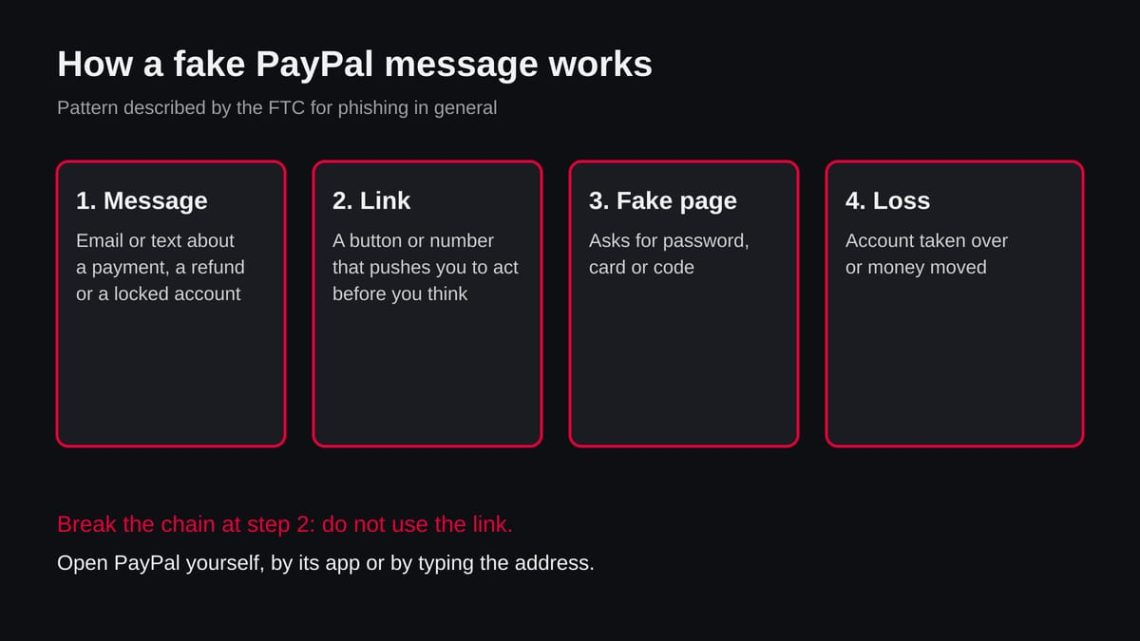
Phishing is a message that pretends to come from a company you know so that you give away a password, a card number or a code. PayPal is a common name in such messages because so many people hold an account. The Federal Trade Commission lists payment apps among the senders that phishing messages copy, next to banks, utilities and card companies.
This is not a program on your phone, so there is nothing to uninstall. The harm comes from what you do after you read the message. If you do nothing and delete it, you lose nothing.
If you tap the link and type your sign-in details on the page that opens, the people behind it can sign in as you. That is why the whole plan in this guide is built around three simple habits:
- do not use the link
- check the account yourself
- report the message
We want to be plain about what we know. This is a radar topic, a name that many people search, and it is not one web address that we could test. We have no list of reported addresses for it, no registration data and no sample message.
The facts below come from the FTC, the FBI’s Internet Crime Complaint Center and Google’s Chrome help page, which we read on 8 November 2026. We did not manage to read PayPal’s own reporting page, so we send you to it without quoting it.
- What it is
- Phishing that uses the PayPal name, and the act of reporting it
- How it reaches you
- Email, text message, a call that points to a web page, or a pop-up
- What it wants
- Your PayPal password, card details, a one time code or a payment
- Not the same as
- A virus on your device or proof that your PayPal account was hacked
- Best first move
- Do not click; open PayPal yourself and look