
Last Updated on July 2, 2026 by Cliche
Small apartments rarely have rooms that do only one thing. The living area often doubles as dining room, home office, and gathering space. In that layout, the dining table becomes one of the most important decisions, even if it’s not the largest piece of furniture.
A table can make a small home feel more settled, giving meals a proper place and helping the apartment feel less temporary. But the wrong table can block the walkway, crowd the kitchen, or turn an open-plan room into a maze of furniture.
The challenge is that small homes still need real comfort, not a folding emergency solution. The best small-space dining table isn’t the one that disappears — it’s the one that knows when to be present.
That is why space-saving dining tables are not just practical purchases. In a modern apartment, they are layout tools. They help a small home shift between ordinary days and more social moments without asking the furniture to stay in “hosting mode” all the time.
Scene One: The Table Beside the Kitchen
The dining table often naturally lives near the kitchen, where food travels a short distance and cleanup is easy. But mistakes happen quickly here: a too-wide table blocks cabinets, bulky chairs sit permanently in the walkway, and a table pushed too close to the wall makes one side uncomfortable.
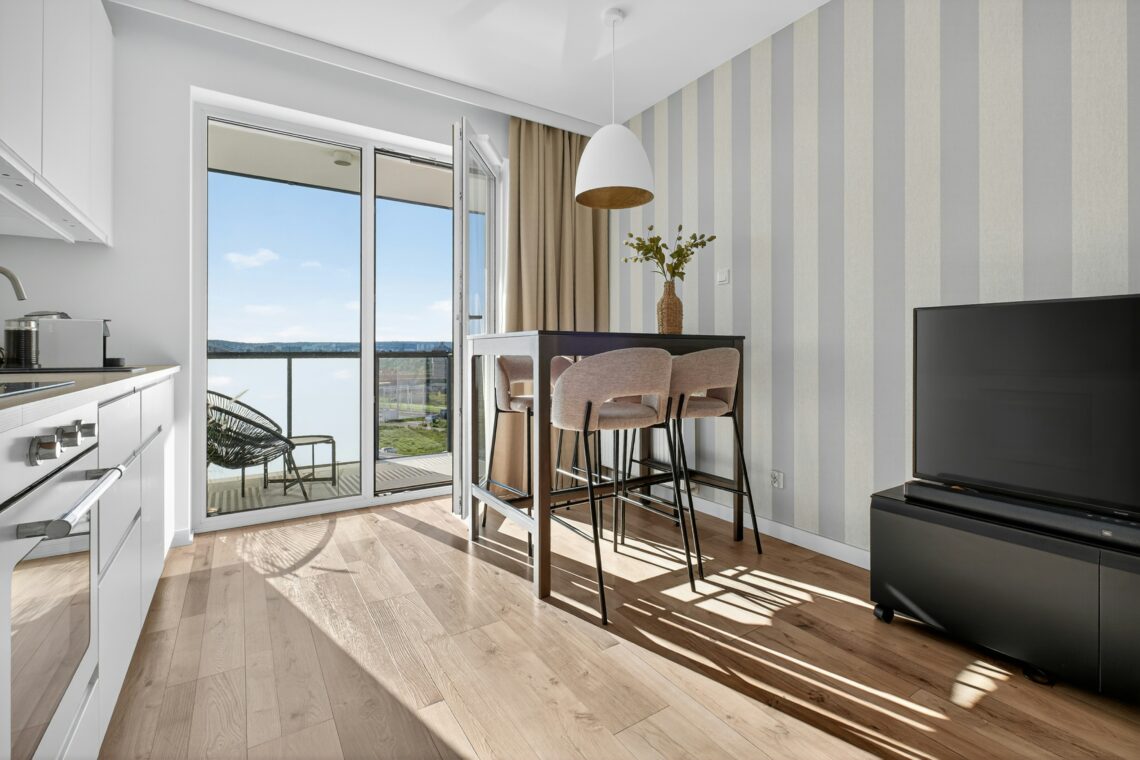
Shape matters most in this zone. A slim rectangular table can follow the kitchen line without interrupting movement, a small round table can soften a tight corner, and an extendable table can stay compact most days while opening when needed. A good test: can someone cook while another person sits at the table without both constantly moving out of each other’s way?
Scene Two: The Table Behind the Sofa
In open-plan apartments, the space behind the sofa is often forgotten territory. With the right table, it can become a compact dining area that also divides the room — especially useful in studios with no separate dining space.
The trick is depth: not so deep it squeezes the sofa area, not so narrow it becomes useless. The setup works best when the table feels visually light — slim legs, rounded corners, armless chairs — so the arrangement doesn’t feel crowded. A pendant light nearby helps the zone feel intentional rather than improvised.
Scene Three: The Window Table
A small dining table near a window can make an apartment feel more generous than it is. Natural light changes the mood — a simple breakfast or laptop session feels less boxed in near a window.
Round or oval tables work beautifully here since softer edges allow easier movement. The danger is overfilling the area: avoid tall-backed chairs that block light, keep the surface easy to clear, and use one strong design detail rather than decorating every inch. A window table doesn’t need to be large to feel special — it needs to feel easy to return to.
Scene Four: The Wall-Side Table That Expands
One of the most useful strategies is placing a table against the wall for daily use and pulling it out when needed — practical for people who occasionally host. During the week, it serves two comfortably; when friends visit, it expands into the room.
This is where extendable designs earn their value. The setup works best when surrounding furniture is easy to move — light chairs, a bench that tucks underneath, spare chairs stored elsewhere until needed. This isn’t about hiding the table; it’s about giving the apartment more than one version of itself.
Scene Five: The Table That Also Works as a Desk
In small apartments, the dining table often doubles as the work table. That requires enough depth for a laptop and coffee cup, a surface that handles daily use, and the ability to reset easily at day’s end — because a table buried in work items makes the whole apartment feel unfinished.
Nearby storage matters here: a small cabinet, cart, or basket can hold chargers and notebooks so the table returns to being a dining space. The best multi-use table helps the apartment switch modes rather than blurring the whole day together.
The Small-Space Dining Rule: Keep the Daily Footprint Honest
The biggest mistake is choosing furniture for the rare dinner party instead of the daily routine. A dining area should be judged first by its everyday footprint: Can you walk around it easily? Does the room still feel open when no one’s eating? Can the table clear quickly?
Hosting matters, but daily comfort matters more — which is why flexible tables that expand only when needed are so useful.
What to Notice Before Buying
Before choosing a table, start with the room, not the product photo. Notice the paths people already take — kitchen to sofa, door to window — and make sure the table won’t interrupt them. Then notice unused potential: a blank wall, a window corner, the back of the sofa.
A useful guideline: the table should be large enough to make meals feel intentional, small enough to keep the room open, and flexible enough to adapt when life gets social.
A Better Ending for the Small Dining Area
The best small apartment dining spaces aren’t defined by how much furniture they fit, but by how naturally that furniture supports the day. A table near the kitchen eases meals; one behind the sofa creates a room within a room; a window table turns a corner into a ritual; a wall-side table expands for guests; a table-desk hybrid keeps work organized.
None of these solutions needs a large footprint — just a clear understanding of how the apartment is actually used. In a small home, the dining table shouldn’t apologize for taking up space. It should earn that space every day.
Read more home decor articles at ClichéMag.com
Images provided by Deposit Photos, BingAI, Adobe Stock, Unsplash, Pexels, Pixabay Freepik, & Creative Commons. Other images might be provided with permission by their respective copyright holders.