
Last Updated on August 5, 2026 by Cliche
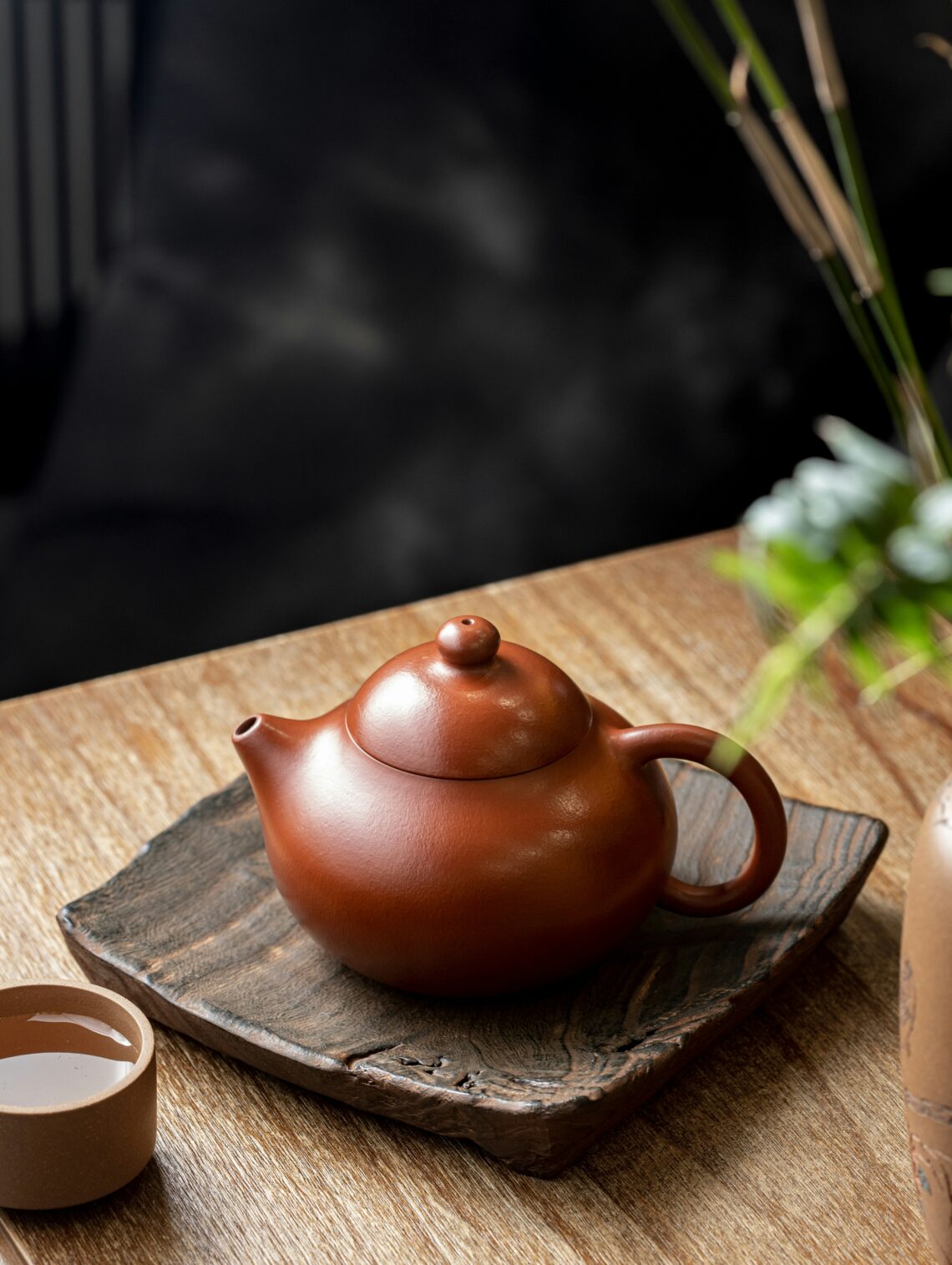
When choosing a Yixing teapot, many people focus first on color, shape, or decoration. But the most important difference is often invisible at a glance: the way the teapot was made. A handmade Yixing teapot is not just a clay container for tea; the handmade Yixing Clay Teapots’ body, lid, handle, spout, air hole, and internal filter are shaped and adjusted as one complete brewing tool. An experienced artisan repeatedly evaluates details such as thickness, angle, position, proportion, and balance, refining them throughout the making process.
A machine-made teapot, formed from a standardized mold or press, mainly repeats a predetermined shape. It cannot assess whether a handle feels uncomfortable, whether one section is too thick, or whether the spout needs a small correction to pour cleanly. This is the central reason for choosing handmade: the artisan does not merely reproduce a shape, but continuously controls and refines the pot for real use – ultimately, for how the tea made in handmade Yixing Clay Teapots will taste in the cup.
Why Handmade Construction Matters
The advantages of a handmade Yixing teapot are practical. They lie in clay integrity, wall thickness, thermal control, balance, pouring precision, functional design, and individual character. These differences become clear when you brew gongfu tea: how naturally the pot handles, how evenly it holds heat, how smoothly it pours, and how easily you control each infusion. But the ultimate payoff is in the cup – a fuller, cleaner, more balanced tea liquor that reflects the pot’s careful construction.
1. Protecting the Clay’s Natural Structure
Genuine Yixing zisha is prized for its microscopic dual-pore structure—open pores that allow a gentle breathability and closed pores that maintain density. After proper firing, this structure contributes to heat retention and a subtle interaction between clay and tea. A skilled maker prepares the clay by beating, paddling, and compressing it in a controlled way, preserving the natural grain and pore network. Machine production often requires the clay to be ground extremely fine and heavily compressed to suit molding and fast forming. Excessive grinding or compression may reduce the openness of the pore structure, resulting in a denser fired body with lower breathability. By working the clay by hand, the artisan keeps its authentic character intact. This natural pore structure helps soften the tea liquor, giving it a mellow, full-bodied mouthfeel.
2. Purposeful Wall Thickness and Heat Management
Wall thickness directly affects weight, heat retention, and how the pot responds to temperature. In a handmade teapot, the maker can adjust thickness purposefully. The base may be left slightly sturdier for structural support, while the upper body is refined to reduce unnecessary weight. The lid needs enough substance to feel stable, yet not so heavy that the pot becomes top-heavy. A machine mold delivers uniform thickness, but uniformity is not the same as good design. A thoughtful maker builds the wall profile to match the pot’s size, shape, and intended tea—giving you better heat stability without making the pot clumsy.
3. Balance, Handling, and Pouring Performance
A teapot can look beautiful on a shelf yet feel awkward when filled with hot water. In a well-made handmade pot, the handle curve, spout length, lid knob, and overall weight distribution are considered together. The handle should give fingers enough room and allow a balanced lift without straining the wrist. The pot should not tip forward heavily when full. The lid must sit securely yet lift easily, and the air hole must let air in smoothly so the pour is steady and clean.
Pouring performance is the clearest test of this coordination. A good handmade teapot releases tea in a smooth, controlled stream, without prolonged dribbling or gurgling. The artisan fine-tunes the spout opening, the internal filter holes, and the alignment between body, lid, and spout before firing. These small adjustments – checking that the stream starts quickly, stops cleanly, and does not trap leaves – are difficult to achieve consistently in a mold-released pot that receives no individual correction.
4. A Shape Designed for Brewing
A handmade teapot can be designed around the tea it is meant to brew. A wider body gives large, twisted leaves room to expand. A slightly narrowed opening helps retain heat. A flatter shape allows oolong leaves to spread evenly; a taller shape suits teas that benefit from deeper infusion. The maker can also control how fast the pot empties. In gongfu brewing, even a few seconds’ difference in pour time can change the strength of an infusion. Machine production usually starts from the goal of efficient repetition. Handmade production gives the artisan freedom to connect shape with function, so the form has real brewing purpose.
5. Individual Character and Lasting Patina
Machine-made teapots are designed for consistency, with highly uniform curves, surfaces, and decorative details across large batches. Handmade Yixing teapots, by contrast, naturally show small, controlled variations. Even when an artisan repeats a classic form, slight differences in proportion, handle curve, or surface finishing may emerge. These are not necessarily flaws; they reflect the maker’s judgment, technique, and individual touch. Many teapots also feature hand-carved inscriptions, calligraphy, or painted decoration that becomes part of the overall artistic composition.
Because traditional Yixing teapots are unglazed, their surfaces also change gradually with use. Through regular brewing, rinsing, careful drying, and handling, the clay develops a soft, natural sheen known as patina. This appearance comes from repeated use rather than artificial polishing. Over time, the teapot becomes connected to the owner’s brewing habits and preferred teas, developing a personal character that makes each piece uniquely meaningful.
Does Handmade Mean Better Tea?
The claim that a handmade Yixing teapot always makes tea taste better is too simple, as many variables shape the final result, including the tea itself, water temperature, amount of leaves, infusion time, the clay, firing, shape, wall thickness, and pouring speed.
What a well-made handmade teapot does offer is more careful structural adjustment: the body can give leaves enough room to expand, the wall thickness can support suitable heat retention, and the lid and air hole can work together with the spout to maintain stable airflow and deliver a fast, clean pour that ends the infusion precisely when intended. When genuine zisha is properly processed and fired, its particular balance of density, porosity, and heat retention may also help certain teas taste smoother, fuller, and more balanced. The advantage, then, does not come from “handmade” as a label, but from suitable clay, careful processing, functional design, skilled construction, and proper firing.
How to Choose a Handmade Yixing Teapot
When you look at a teapot, go beyond color and surface decoration. First, confirm the production method—fully handmade, half-handmade, or machine-pressed are not interchangeable. A practical capacity of 100–180 ml works well for personal or small-group gongfu sessions.
Check the balance: the handle should allow a comfortable grip, the spout should not make the pot front-heavy, and the lid knob should be easy to control. The shape should suit your tea; wide-leaf oolongs and pu-erhs generally prefer a broader body with enough opening for easy cleaning.
A trustworthy seller will provide clear, realistic information about the clay, production method, capacity, artist, and certificate where applicable. Ultimately, choose a handmade teapot for its construction and how well it serves your brewing, not simply because it carries a famous name, an impressive seal, or a high price.
In Essence
A handmade Yixing clay teapot represents continuous judgment – over the clay’s porosity, the wall’s thickness, the balance of handle and spout, and the coordination of lid, air hole, and pour. These decisions shape a teapot that is comfortable to hold, precise to brew with, and responsive to your tea. Combined with genuine zisha that breathes and slowly develops a personal patina, a well-made handmade pot helps bring out the tea’s aroma and develop a fuller, smoother, and more mellow flavor, offering an integrated experience of craft, function, and quiet daily pleasure that machine production cannot fully reproduce.
Read more lifestyle articles at ClichéMag.com
Images provided by Deposit Photos, BingAI, Adobe Stock, Unsplash, Pexels, Pixabay Freepik, & Creative Commons. Other images might be provided with permission by their respective copyright holders including AI generators.