
Last Updated on August 5, 2026 by Cliche
Standing at the meat case, have you ever wondered if grass fed beef is really “better,” or if you are just paying for a label?I get this question a lot, and it usually shows up as: “Grass Fed Or Grain Fed Beef, which steak should I choose?”
Good news, you can make a smart pick in about a minute once you know what to look for.
In this guide, I’ll walk you through what grass-finished beef means (and what “grass-fed” may still leave fuzzy), how grain-finished beef changes marbling and tenderness, and how all of this affects omega-3 fatty acids, flavor, animal welfare, and environmental impact.
Grab your shopping list, and we’ll sort it out together.
Key Takeaways
- The USDA Agricultural Marketing Service withdrew its grass (forage) fed marketing claim standard effective January 12, 2016, so “grass-fed” wording can vary by brand and documentation.
- If you want a tighter definition, look for programs that verify a grass claim, like the USDA SVS Grass Fed Program, which publishes an official listing of verified operations (last revised July 9, 2026).
- Fatty-acid profiles can shift with finishing, and a 2026 North American profiling study reports grain-finished beef often lands around an omega-6:omega-3 ratio in the 7:1 to 12:1 range, while some grass-finished beef can be lower, yet real-world retail samples vary.
- USDA quality grades (Prime, Choice, Select) track marbling and maturity, so they hint at tenderness and juiciness, not farming practices or whether cattle ate grass or grain.
- For cooking safety, USDA food-safety guidance lists 145°F plus a 3-minute rest for whole steaks and roasts, and 160°F for ground beef.

Understanding Grass Fed Beef and Grain Fed Beef
If labels have ever made you feel like you need a decoder ring, you’re not imagining things.
The biggest point of confusion is that grass-fed beef can describe part of the animal’s life, while the finishing ration (what cattle eat in the last stretch before harvest) is what most strongly shifts marbling, tenderness, and fat makeup.
What “grass-fed” can mean on a US label
After the USDA Agricultural Marketing Service withdrew the federal grass (forage) fed marketing claim standard in 2016, producers could still use “grass-fed” claims, yet the burden shifted to brand documentation and label approval processes.
That’s why two packages can both say “grass-fed,” yet one animal may have been grass-finished beef (no grain at any life stage) and another may have spent its final weeks or months on grain to boost marbling.
Meat scientist Sierra Anthony put it bluntly in an interview: cattle need forage, so the phrase “grass-fed” can be misleading if it skips the finishing details.
What “grain-fed” usually means (and why it tastes different)
Grain-fed beef usually means cattle ate a grain-based finishing ration, often in a feedyard, to build intramuscular fat.
That intramuscular fat is the marbling you see as white flecks and streaks inside the muscle, and it’s a big reason grain-finished beef often tastes richer and feels more tender.
You’ll also see blended systems marketed openly. For example, some sellers describe their beef as “grass-fed, grain-finished,” which is a real category and can be a solid middle ground for many dietary choices.
A quick label-reading checklist (what I’d look for first)
- Look for “100% grass-finished” or “grass-fed and grass-finished” if you want no grain at any point.
- Watch for “grass-fed, grain-finished” if you want a pasture start with a more tender finish.
- Don’t let breed names decide the feed story: Wagyu beef and Angus beef can be grass-finished or grain-finished, depending on the program.
- Use verified programs as a shortcut: the USDA SVS Grass Fed Program publishes verified operations, which helps when packaging language feels vague.
- Treat social media claims carefully: if a Facebook thread points you to a random pdf full of odd technical terms like xref or flatedecode, treat it as entertainment, not proof.
Nutritional Differences
Nutrition is where many people start, and yes, finishing can shift fats. Grass fed beef often has a more favorable omega-3 to omega-6 ratio, and it tends to be leaner, so your cooking method matters too.
Omega-3 and omega-6 fatty acids (numbers you can actually use)
If you’re buying beef for “health benefits,” it helps to keep expectations realistic.
A 2026 North American profiling study found that a 100 g serving of grass-finished ribeye provided about 46.8 mg of combined EPA and DHA, compared with about 15.6 mg in grain-finished beef, assuming similar fat content in the cut.
That is a real bump, but it is still modest compared to fatty fish, so think of beef choice as a nudge, not your main omega-3 plan.
| Beef Type | Typical Omega-6 : Omega-3 Pattern | What It Means for Your Plate |
|---|---|---|
| 100% Grass-Finished Beef | Often lower than grain-finished, but real-world retail can vary | Good pick if you want a leaner steak and you care about omega balance, just cook gently so it stays juicy. |
| Grass-Fed, Grain-Finished Beef | Usually sits between fully pasture-finished and feedlot-finished | Nice compromise if you want less “gamey flavor” with more tenderness, while still keeping some pasture-driven traits. |
| Grain-Finished Beef (typical feedlot finish) | Commonly higher, with many reports placing it in a 7:1 to 12:1 range | Often more marbling and a richer bite, and your dietary choices can balance this with other fats you eat that day. |
| USDA Organic Beef | Depends on how it was finished | Organic rules change drug and feed standards, but you still want to check if it was grass-finished or grain-finished. |
One practical surprise from recent commercial sampling is that “grass-fed” in the marketplace can be inconsistent, and some retail grass-fed samples have shown omega ratios that look more like grain-finished beef. That is why finishing details matter.
Fat content and marbling
Fat changes the whole steak experience, from tenderness to how forgiving it is on the grill.
| Aspect | Grass-Finished | Grain-Finished |
|---|---|---|
| Fat composition | Often has higher omega-3s per unit of total fat, and may have more conjugated linoleic acid. | Often has a higher share of omega-6 fats because of grain-based finishing. |
| Intramuscular fat | Lower on average, so the steak can feel firmer if you overcook it. | Typically higher intramuscular fat after grain-finishing, which boosts juiciness and tenderness. |
| USDA grading effects | Less likely to earn Prime because Prime is marbling-driven. | More likely to hit Choice or Prime because the finish is designed to build marbling. |
| Cooking notes | Benefits from quick searing and careful doneness checks. | More forgiving over higher heat because marbling melts and self-bastes. |
Taste and Texture
Flavor is where opinions get loud, especially online, and I get it. Grass-finished beef can taste “clean” and mineral, while grain-finished beef often reads buttery and rich because the fat melts differently.
Why grass-finished can taste “gamey” (and how to make it taste great)
Grass-finished beef is usually leaner, and that alone can make flavors feel sharper.
Some grass-fed fat also looks more yellow because of carotenoids in pasture, and a 2013 USDA Economic Research Service report notes that this can pair with a stronger beef flavor that some people like.
If you want to soften the grassy edge without changing what you buy, pair it with a bold pan sauce (garlic, butter, and herbs) and stick to medium-rare to medium for most steaks.
Why grain-finished often feels more tender
Marbling is the main reason.
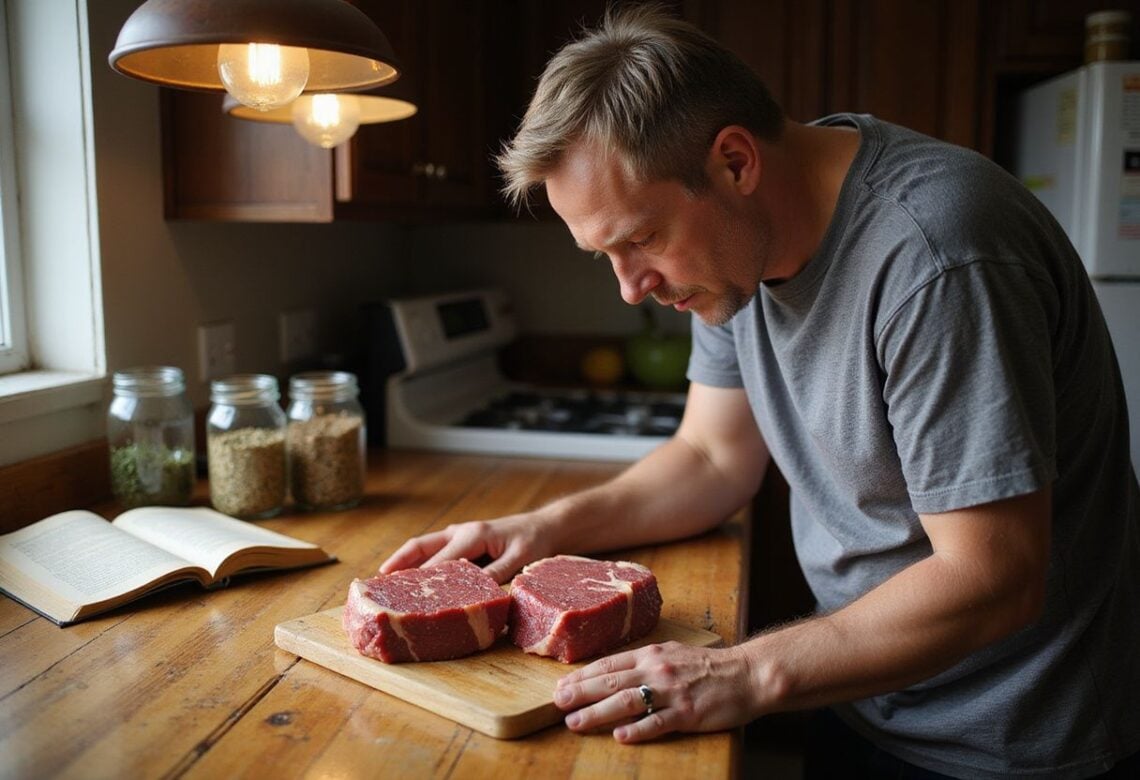
USDA explains marbling as fine threads of fat within meat, and more marbling means more flavor, moisture, and tenderness, which is why Prime and Choice are so popular for steak nights.
Cooking tips that match the steak you bought
- Use a thermometer: USDA food-safety guidance lists 145°F plus a 3-minute rest for whole steaks, and that rest helps juices settle.
- For grass-finished: sear hot, then finish at a lower heat, and pull it off the heat a little early so it does not dry out during the rest.
- For grain-finished: you can push harder sears and still get a juicy center because marbling buys you time.
- Cut choice matters: if you’re nervous about a lean steak, start with ribeye or sirloin before you try very lean rounds.
Environmental Impact
People often assume pasture always wins on the environment, and the truth is more complicated.
Pasture-based systems can support soil goals and biodiversity in the right context, while feedlot-based systems can produce beef with fewer emissions per pound in some analyses because cattle reach market weight faster.
What the research is saying right now
A 2025 peer-reviewed analysis of US grass-fed beef reported that, per kilogram of protein, emissions from even efficient grass-fed systems were about 10% to 25% higher than industrial US beef.
That does not mean grazing practices never help land, it means “environmental impact” depends on the yardstick you care about most (carbon, land, water, wildlife, or local soil goals).
How to shop with your values without guessing
- Ask one direct question: “Was this animal grass-finished, and can you show documentation for the claim?”
- Look for proof over vibes: verified programs and clear standards beat pretty packaging.
- Reduce waste: freezing leftovers and using bones for stock is the fastest personal win for impact.
- Pick the right cut for the job: tougher roasts cooked low and slow can stretch your budget and lower the “special-occasion only” pressure that leads to food waste.
Price Comparison
Price is usually the final vote, and I respect that.
Grass-finished beef often costs more because it can take longer to finish an animal on forage, and direct-to-consumer programs also build in processing and shipping costs.
What grass-finished premiums can look like in real US reports
In the USDA Agricultural Marketing Service National Quarterly Grass Fed Beef Report (Q2 2025), the average direct-to-consumer grass-fed ribeye steak was listed at $38.46 per pound, compared with $12.91 for a commodity ribeye benchmark, with similarly large spreads on some other cuts.
| Cut (Q2 2025 report examples) | Grass Fed (Direct-to-Consumer Avg $/lb) | Commodity Avg $/lb | Listed Premium $/lb |
|---|---|---|---|
| Ribeye Steak | 38.46 | 12.91 | 25.55 |
| Chuck Roast | 11.70 | 5.96 | 5.74 |
| Brisket | 13.41 | 5.23 | 8.18 |
How to get good value (even if you buy premium beef)
- Save grass-finished for the cuts where it shines: ground beef, sirloin, and steak nights where you cook to medium-rare.
- Buy grain-finished for “can’t mess it up” meals: long grills, big crowds, and anyone who likes a buttery bite.
- Use subscription brands as a label lesson: some companies, like Omaha Steaks, openly sell “grass-fed, grain-finished,” which shows how feed terms can stack.
- Compare like with like: compare ribeye to ribeye, and account for shipping, trimming, and whether it’s portioned.
- Track everyday prices too: a 2026 news report citing Bureau of Labor Statistics data pegged ground beef at $6.82 per pound in June 2026, so even “regular” beef can feel premium right now.
Conclusion
If you’ve read this far, you’re already ahead of most shoppers.
You’re asking the right question: “What am I really paying for, and what will I taste?”
Here’s the cleanest way I’ve found to think about it.
Grass-finished beef is about a no-grain finish, a leaner steak, and often a more favorable omega balance.
Grain-finished beef is about marbling, tenderness, and a richer bite, usually at a lower cost per pound.
Start with your goal, then let the label follow.
- If nutrition is your main goal, pick grass-finished when you can, and remember beef is still a modest source of omega-3 fatty acids compared with seafood.
- If tenderness is your main goal, choose grain-finished, and use USDA Prime or Choice as a quick shortcut for marbling.
- If animal welfare is your main goal, read beyond the front label and look for clear documentation, not just warm words.
- If environmental impact is your main goal, focus on verified practices and cut waste, since climate results vary by system and measurement.
One last practical tip: cook lean steaks with tighter temperature control.
USDA food-safety guidance lists 145°F plus a 3-minute rest for whole cuts, and that rest helps both safety and juiciness.
So, grass fed beef or grain fed beef?
Pick grass fed beef when you want a leaner steak and a pasture-forward flavor, and pick grain fed beef when you want dependable tenderness and value.
Read the finishing words, trust clear documentation, and make the steak fit your real life.
Read more food articles at ClichéMag.com
Images provided by Deposit Photos, BingAI, Adobe Stock, Unsplash, Pexels, Pixabay Freepik, & Creative Commons. Other images might be provided with permission by their respective copyright holders including AI generators.