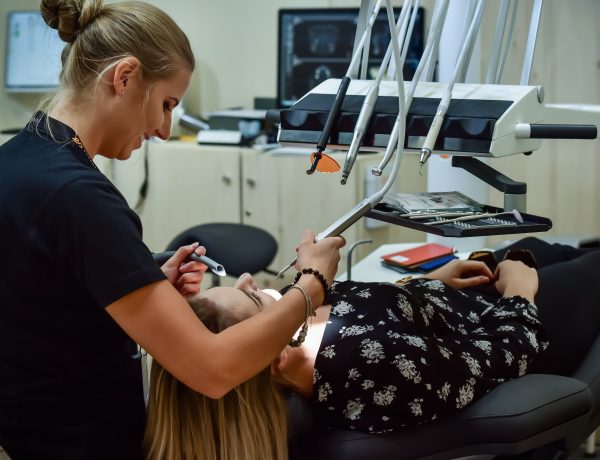

It’s annoying when your teeth start to lose their whiteness a few months after treatment. The treatment itself wasn’t the problem – it’s the fact we don’t always realize what we eat and drink daily could be causing stains to develop and lock in.
How staining really works
There are two kinds of discoloration that are good to be aware of. Extrinsic discoloration is what you see on the surface – the residue that continues to accumulate every time you have a cup of coffee, tea, or a cigarette. Intrinsic discoloration is what seeps deep into the dentin, the dark yellow to brownish material under your enamel. Since many people only treat the former, it can seem like no matter how diligently you brush and floss, your teeth just aren’t as bright as they used to be.
Your enamel’s composition can also exacerbate discoloration. The surface of enamel isn’t flat; it’s dotted with microscopic nooks and crannies. When that porosity becomes more pronounced – either from exposure to acidic solutions, regular wear and tear, or just getting older – chromogens and tannins have more places to hide. Chromogens are the colorful, heavily pigmented compounds in many foods and drinks (like blueberries and balsamic vinegar); tannins are plant-based compounds that make it easier for those colorful chromogens to stick to enamel. Tea is loaded with tannins – and happens to be very acidic. Yep, it’s basically a triple threat of stain production.
Maintenance as a long-term strategy
Even if you eat well, those intrinsic stains are still there. It’s not your diet that’s at fault, but your biology. Dentin naturally yellows with age, and no magical amount of water or fibrous foods will stop that.
The harsh reality is that you need the unnatural bleaching power of carbamide peroxide (which converts to hydrogen peroxide) to penetrate tooth enamel and lift ingrained staining. It’s not a one-time fix, but regular use of a professional teeth whitening kit that will counteract your diet where it fails. How often you use it depends on your consumption, but think of it as skincare more than a one-off solution.
Post-whitening sensitivity is caused by the fact that bleaching your teeth can oxidatively cause your dentinal tubules to be exposed. This passes, but bear in mind that common sense breather rules apply.
The white shirt rule in practice
Here’s a good filter to apply: if it could leave a permanent mark on a white cotton tee, it’s putting in overtime to weaken the effects of your teeth whitening. Turmeric, balsamic vinegar, soy sauce, and dark berries – all major culprits. No one is saying cut them from your diet. But you could be smarter about it.
In fact, timing water consumption is your secret to success. Whether you’ve had coffee, red wine, or a particularly decadent, berry-loaded smoothie, getting water into your mouth quickly will help make sure those chromogens don’t have enough time to cling to your enamel. It’s even more effective than drinking through a straw which is often suggested as a solution (it doesn’t help with full-coat-the-mouth substances).
The solution is adding more fibrous foods to your diet. Crunchy raw foods like carrots, apples, and celery need extra chewing, which massages the gums and increases salivary flow, keeping your mouth clean and neutralizing acids. Saliva is your body’s built-in defence system – it buffers acids, remineralizes enamel, and washes away staining agents. Anything that stimulates it works in your favor.
Brushing timing matters more than you think
Many people think that brushing your teeth right after eating food is good for oral health. However, when it comes to consuming acidic foods such as citrus, vinegar, or fizzy drinks, the rule no longer applies. This is because acid works to temporarily weaken enamel. If you brush your teeth while the acid has softened the enamel, it will cause micro-abrasion. Instead, you should wait for about 30 minutes to allow saliva to remineralize the surface of the teeth before you start scrubbing.
The abrasiveness of your toothpaste also plays a crucial role here. Toothpaste abrasiveness is measured on an RDA scale, which shows how fast they wear away enamel. Whitening toothpaste, in particular, is very high on the scale, as it removes surface stains by abrasion rather than chemical action and does nothing to alter the intrinsic discoloration inside the dentin. Over time, this type of toothpaste can make your enamel more porous, which makes it easier for your teeth to stain.
Protecting the investment
Almost 99.7% of adults report that a healthy smile is an important social asset (AACD), but staining caused by certain foods is the primary reason why people need to re-do whitening within a year. The answer isn’t abstinence. It’s developing a maintenance plan that recognizes the way you really live – and that includes your 5 cups of coffee. None of the habits above involve a complete lifestyle revamp. Just a little dedication.
Read more beauty and dental care articles at ClichéMag.com.
Images provided by Deposit Photos, BingAI, Adobe Stock, Unsplash, Pexels, Pixabay Freepik, & Creative Commons. Other images might be provided with permission by their respective copyright holders.