
Last Updated on July 23, 2026 by Cliche
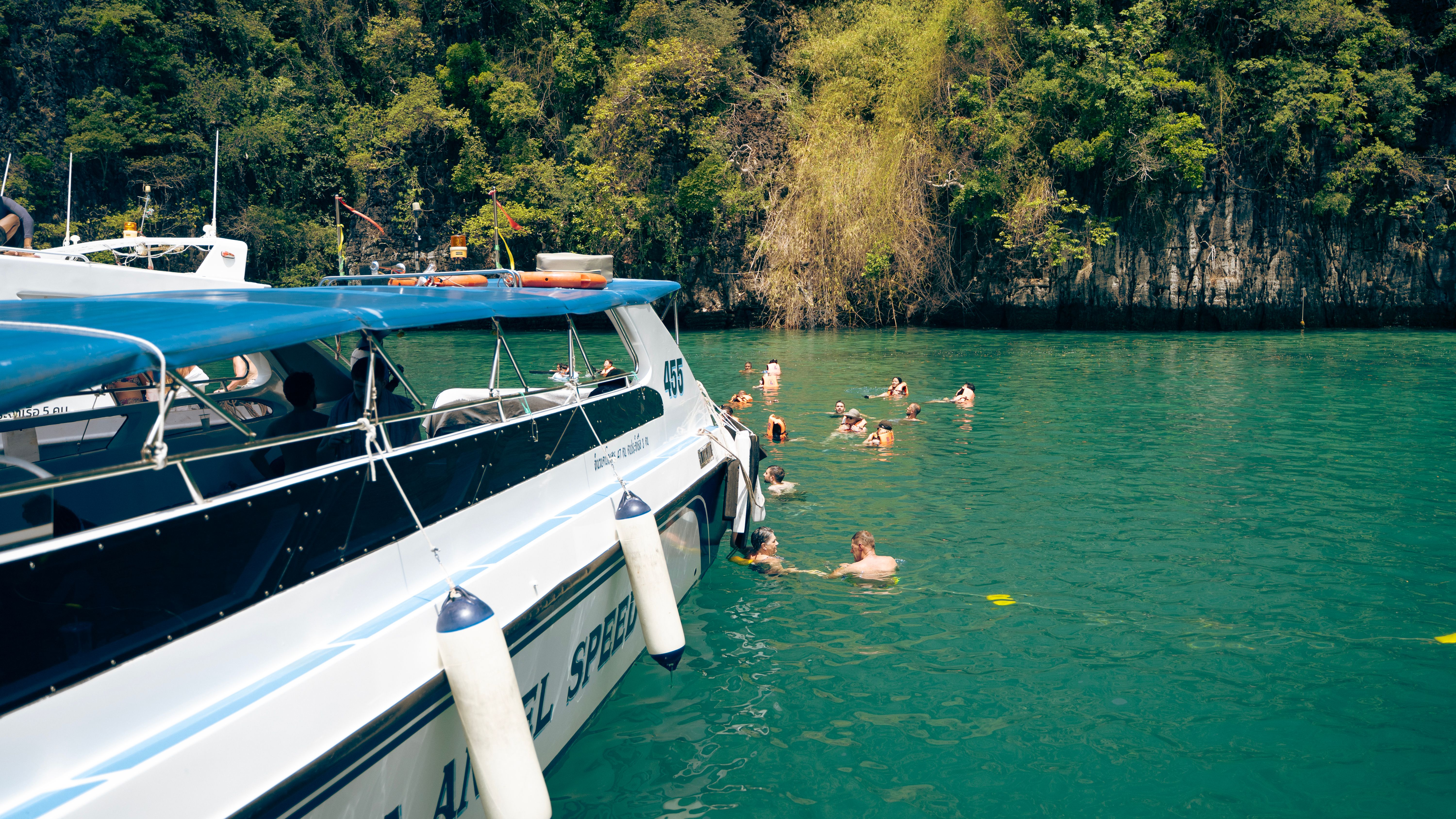
A swimming stop can be the highlight of a boat tour. It is the moment the scenery stops being something you admire from the deck and becomes something you move through, float above, and experience firsthand. But if you have never done one before, it is fair to wonder what actually happens between the captain cutting the engine and everyone climbing back onboard during your boat tour.
The short answer: more structure than many first-time guests expect, and usually more ease than they fear. A well-run stop is not a chaotic free-for-all. It is a carefully managed window of time shaped by weather, currents, visibility, group ability, and the character of the site itself. Knowing that in advance helps you relax and enjoy it.
Before You Jump In
Expect a briefing, not just a splash-and-go moment
Most reputable operators do not simply point at the water and wave everyone overboard. Before anyone enters, there is usually a quick orientation covering where to swim, how long you will have, what marine life you might see, and any hazards to avoid. That might include boat traffic, coral heads near the surface, rocky entry points, or changing currents.
Pay attention, even if you are a confident swimmer. Conditions can vary dramatically from one stop to the next. A calm lagoon and an outer reef edge are two very different environments, and tour crews plan around those differences.
You may also be told whether the stop is best for casual floating, active snorkeling, or short-distance swimming. That distinction matters. Some people imagine every swim stop as a leisurely dip in perfectly still water. In reality, some are built around exploration, while others are simply a chance to cool off and enjoy the setting.
The entry is often simpler than you think
Not every boat stop involves a dramatic dive from the side. In fact, many do not. Depending on the vessel, you might enter via a ladder, a shallow stern platform, or a guided step-in point. That is good news for nervous swimmers and anyone who does not love jumping into open water.
Gear is usually straightforward too: mask, snorkel, fins if appropriate, and sometimes a flotation aid. If you are not an experienced snorkeler, say so early. Crews can often give basic pointers that make the difference between fumbling with a mask and actually enjoying the reef.
What the Stop Actually Feels Like
The first few minutes are about adjustment
Even on a warm day, the first contact with the water can be a little startling. Saltwater feels different from a pool. Open water has movement. Visibility may be spectacular, but it also changes with depth, sun angle, and the seabed below you.
Give yourself a minute. Most people settle in quickly once they remember they do not need to “perform.” You are not racing anywhere. You are orienting yourself, checking your breathing, and letting your body find its rhythm.
That is also why itinerary style matters. Some tours build in enough time for guests to ease into the experience rather than rush it. If you want a practical sense of how that pacing can look, reviewing a sample guided island and reef exploration tour can be useful, not as a booking prompt, but as a way to understand how stops are typically balanced between transit, briefing, swimming, and sightseeing.
You will probably see more when you slow down
One common mistake at swimming stops is trying to cover too much water too fast. People kick hard, scan frantically, and tire themselves out in the first ten minutes. The better approach is usually slower and quieter.
Marine life tends to reward patience. A reef reveals itself in layers: the shifting colors of coral, the sudden flash of a parrotfish, the neat geometry of a sea fan, the tiny movement that tells you there is more to look at than the obvious. If the guide points something out, pause and watch rather than immediately swimming on.
And yes, some stops are more scenic than wildlife-heavy. Crystal-clear water, dramatic sandbars, and the simple sensation of floating in a wide blue expanse can be the experience in itself.
Safety and Etiquette Matter More Than People Realize
Even relaxed tours have rules for a reason. Boats drift, currents shift, and visibility from the deck is not the same as visibility in the water. Staying within the designated area is not just about compliance; it helps the crew keep track of everyone efficiently.
The same goes for reef etiquette. Touching coral, standing on shallow formations, or chasing marine life might seem harmless in the moment, but it is exactly how fragile environments get damaged. Healthy reefs are surprisingly vulnerable to careless contact.
A few habits go a long way:
- Keep a comfortable distance from coral and sea life
- Avoid sudden splashing around fish or turtles
- Use reef-safe sun protection where possible
- Let the guide set the pace if the stop is guided
- Head back early if you feel tired, cold, or uneasy
None of this is about limiting fun. It is about making the experience safer for you and lighter on the environment.
What Happens When You Get Back Onboard
Re-entry can be the most awkward part
Getting back onto a boat after a swim is often less graceful than getting in. Ladders move. Fins feel clumsy. Wet skin and sunscreen make everything slippery. This is completely normal.
Usually, crew members help direct people one at a time, sometimes asking guests to remove fins in the water before climbing up. If there is a queue, be patient. Reboarding safely matters more than doing it quickly.
Once onboard, the mood tends to shift fast. Towels come out, people compare what they saw, someone insists they spotted the biggest fish of the day, and the boat settles back into its cruising rhythm. On longer tours, this is often when water, fruit, or snacks appear, and when guests realize how much energy even a gentle swim can use.
How to Make the Most of Each Stop
A little preparation changes everything
The best swimming stops usually feel effortless, but that ease comes from small practical choices. If you arrive overconfident, underprepared, or unwilling to listen, even a beautiful site can become stressful. If you come ready to adapt, most stops are enjoyable whether they involve coral gardens, calm coves, or a simple mid-journey dip.
A few final tips: eat lightly beforehand, secure anything you do not want lost overboard, test your mask fit before entering, and do not pretend to be stronger in the water than you are. Crews would always rather know your comfort level upfront than discover it halfway through the swim.
At their best, swimming stops turn a boat tour from passive sightseeing into something much more immersive. You are no longer just passing through a place. For a little while, you are in it. And that tends to be the part people remember long after the boat is back at the dock.
Read more lifestyle and leisure articles at ClichéMag.com
Images provided by Deposit Photos, BingAI, Adobe Stock, Unsplash, Pexels, Pixabay Freepik, & Creative Commons. Other images might be provided with permission by their respective copyright holders including AI generators.