
Last Updated on April 9, 2026 by Cliche
For many, the COVID-19 pandemic has faded into memory—something filed away as “over.” But for millions living with Long COVID and other post-viral conditions, the crisis never ended. Filmmaker Anna Pakman captures that jarring disconnect in her latest short film, “Back to the Dark Ages,” created for the Easterseals Disability Film Challenge.
Known for blending sharp humor with lived experience, Pakman once again draws from her own reality as a disabled creator. “The pandemic was a mass disabling event,” she explains. “And yet, culturally, we’ve moved on in a way that leaves a lot of people behind. I wanted to explore that gap—but wrapped in an entertaining package.”
A Medieval Mirror to a Modern Crisis
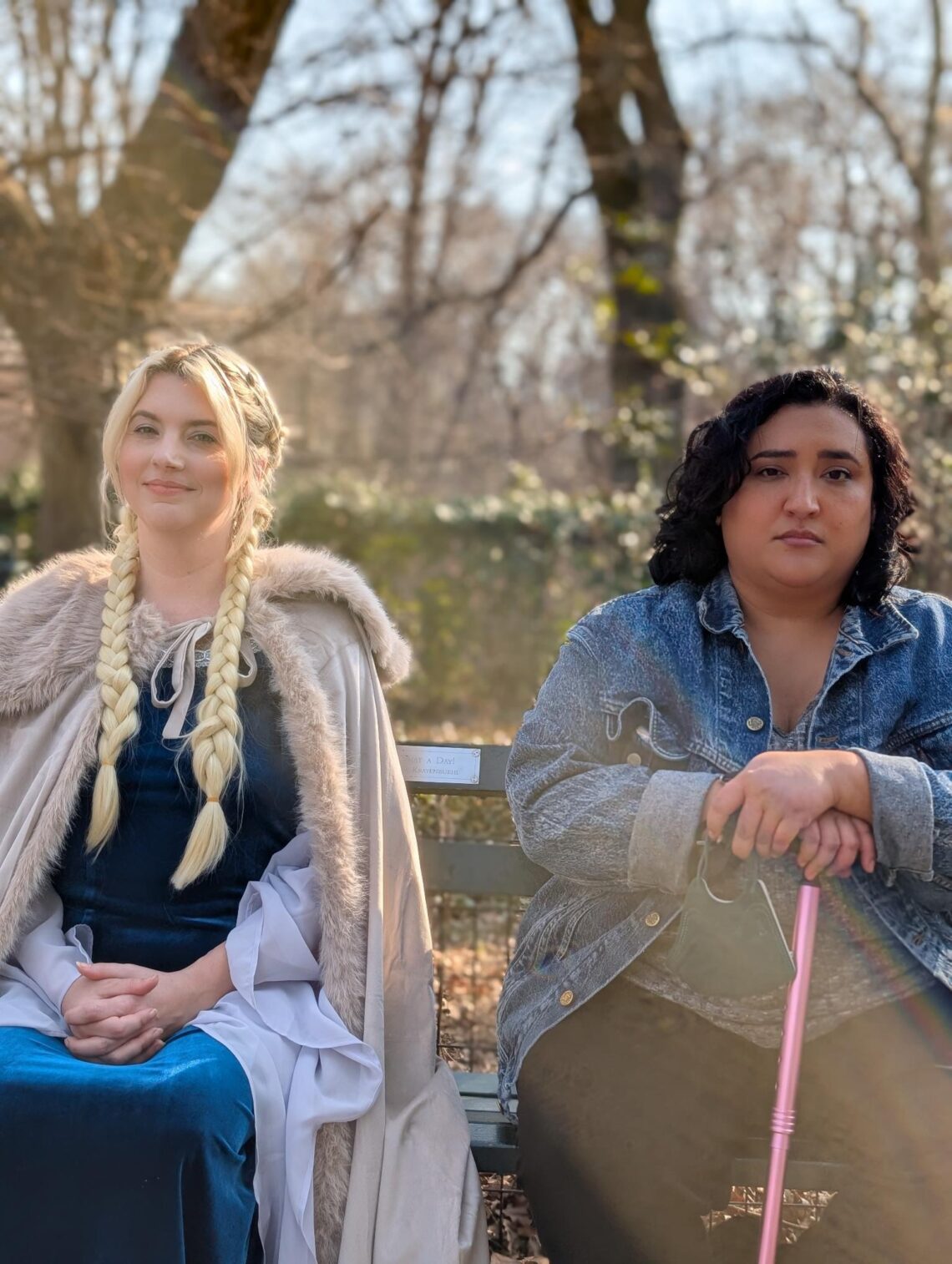
At the heart of Back to the Dark Ages is Christina, a New Yorker navigating a world that increasingly disregards safety and accessibility. When a medieval ghost—Wilhelmina—appears before her, the film leans into magical realism to draw a striking parallel between past and present.
“The irony is that we like to think we’re more advanced now,” Pakman says. “But in a lot of ways, the attitudes toward illness and disability feel very similar. There’s this sense of ‘just deal with it’, but yet we have all of this modern science.”
Rather than delivering a heavy-handed message, the film uses humor to disarm. “Comedy is a way in,” she explains. “If you come at people directly, they shut down. But if they’re laughing, they’re more likely to listen.”
Building an Inclusive Set—On and Off Screen
As with her previous work, Pakman prioritized authentic representation both in front of and behind the camera. Her cast and crew included disabled creatives across multiple disciplines, creating a collaborative environment that reflects the world she wants to see in the industry.
It’s not just about who’s on screen,” she says. “It’s about who gets to tell the story, who’s shaping it, who’s making decisions. That’s where real change happens.”
The fast-paced nature of the Easterseals Disability Film Challenge—teams have just five days to write, shoot, and edit—only heightens the stakes. “There’s no room for inefficiency,” Pakman notes. “So the idea that disabled teams can’t keep up is just false. We do—and we do it well.”
 When Humor and Reality Collide
Though Back to the Dark Ages is filled with comedic beats, its foundation is deeply personal. Pakman herself has experienced the isolation of being in the minority taking COVID precautions six years into the pandemic.
“There’s a line between laughing at something and laughing through it,” she says. “This film lives in that space.”
The film’s tone shifts seamlessly between light and heavy, reflecting the unpredictability of living with chronic illness. One moment, Christina is exchanging witty banter with a centuries-old ghost; the next, she’s confronting the isolating reality of a world that no longer accommodates her needs.
“That duality is very real,” Pakman explains. “You can be joking one minute and completely overwhelmed the next. I wanted the film to feel like that.”
Challenging the Narrative Around “Moving On”
A central theme of Back to the Dark Ages is the cultural pressure to “move on” from COVID—often at the expense of those still affected.
“There’s this idea that resilience means pretending everything is fine,” Pakman says. “But real resilience is acknowledging what’s changed and adapting in a way that includes everyone.”
By framing this modern issue through a historical lens, the film invites viewers to question their assumptions. “If we saw people in the Middle Ages responding this way to illness, we’d think it was absurd,” she notes. “But we’re not that far off.”
A Story About Connection, Not Just Crisis
Despite its themes, “Back to the Dark Ages’ is ultimately a story about connection. The relationship between Christina and Wilhelmina evolves from confusion to understanding, offering a sense of hope without ignoring reality.
“At its core, it’s about finding community,” Pakman says. “Even in the most unexpected places.”
That emotional throughline is what she hopes audiences will carry with them. “I want people to see themselves in it—whether they’re disabled or not. Because the truth is, disability is a part of the human experience. It’s just a matter of when and how.”
Looking Ahead
With “Back to the Dark Ages,” Pakman continues to carve out space for stories that are often overlooked, proving that advocacy and entertainment don’t have to be mutually exclusive.
“I’m always thinking about how to make something that resonates on multiple levels,” she says. “If someone watches this and just enjoys it, that’s great. But if it also makes them think a little differently about the world around them and be more empathetic to the people who have been the most impacted by the pandemic—that’s the goal.”
In a cultural moment eager to close the chapter on COVID, Pakman’s film is a reminder that some stories are still unfolding—and deserve to be told.
Read more Interviews on ClicheMag.com
Anna Pakman Explores the Pandemic Erasure and the Loneliness Epidemic in Comedic Short Film, Back to the Dark Ages. Photo Credit: Courtesy of Anna Pakman.