
Last Updated on January 31, 2026 by Cliche
Creativity doesn’t vanish overnight, but it can get buried under layers of noise. You know the feeling – endless notifications, infinite scroll, the quiet pressure to stay visible, stay relevant, stay on. Even the most creative minds start to feel saturated after a while. People often talk about travel as the answer, but honestly? Most trips just relocate the same digital chaos to a different postcode. Safari, though, offers something genuinely different.
There’s something about wide, open landscapes shaped entirely by nature that immediately shifts your headspace. If you’re after actual space rather than just more stimulation, an African safari stops being about escape and becomes about reduction. Fewer inputs. Fewer interruptions. More room for ideas to form without force.
The Relief of Stepping Away from Constant Input
So much of modern creativity is reactive, isn’t it? Inspiration gets triggered by feeds, trends, algorithms designed to reward speed over substance. Luxury safaris quietly disrupts all of that. Limited connectivity means less temptation to scroll, post, or anxiously check in. Silence isn’t treated as something missing – it’s just there, underpinning everything.
In that setting, your mind begins to slow down. Without the constant drip-feed of external input, your attention turns inward. Thoughts unfold more naturally, free from comparison or performance anxiety. That mental quiet? That’s often where creative clarity starts creeping back.
Rather than hunting for ideas, you tend to find they arrive on their own. Shaped by observation instead of distraction.
Landscapes That Actually Invite Focus
Safari landscapes are expansive in a way that feels almost strange at first. Horizons stretch on without interruption. Colours shift gradually as the light changes. There’s no visual clutter fighting for your attention.
This simplicity does something to your senses. Your eyes stop scanning constantly and start settling. Your mind stops reacting and starts observing. The complete absence of advertising, crowds, and traffic creates an environment where focus feels effortless rather than like hard work.
For photographers, writers, designers, filmmakers – anyone who creates visually – these landscapes offer genuine breathing room. Inspiration doesn’t come from cramming in more detail. It comes from balance, from proportion, from space.
Creative Time Without the Productivity Guilt
One of the more surprising aspects of safari is the total absence of productivity pressure. There’s no expectation to maximise every spare moment or immediately turn experience into content.
Time unfolds according to natural rhythms instead. Early mornings. Long stretches of watching and waiting. Evenings shaped by sunset rather than artificial light. This structure removes that constant urge to optimise every single hour.
When you’re not compelled to document or share in real time, creativity shifts. From output to absorption. You consume less, observe more. Ideas are allowed to sit there, develop, evolve – without needing instant validation from anyone.
Observation as an Actual Creative Practice
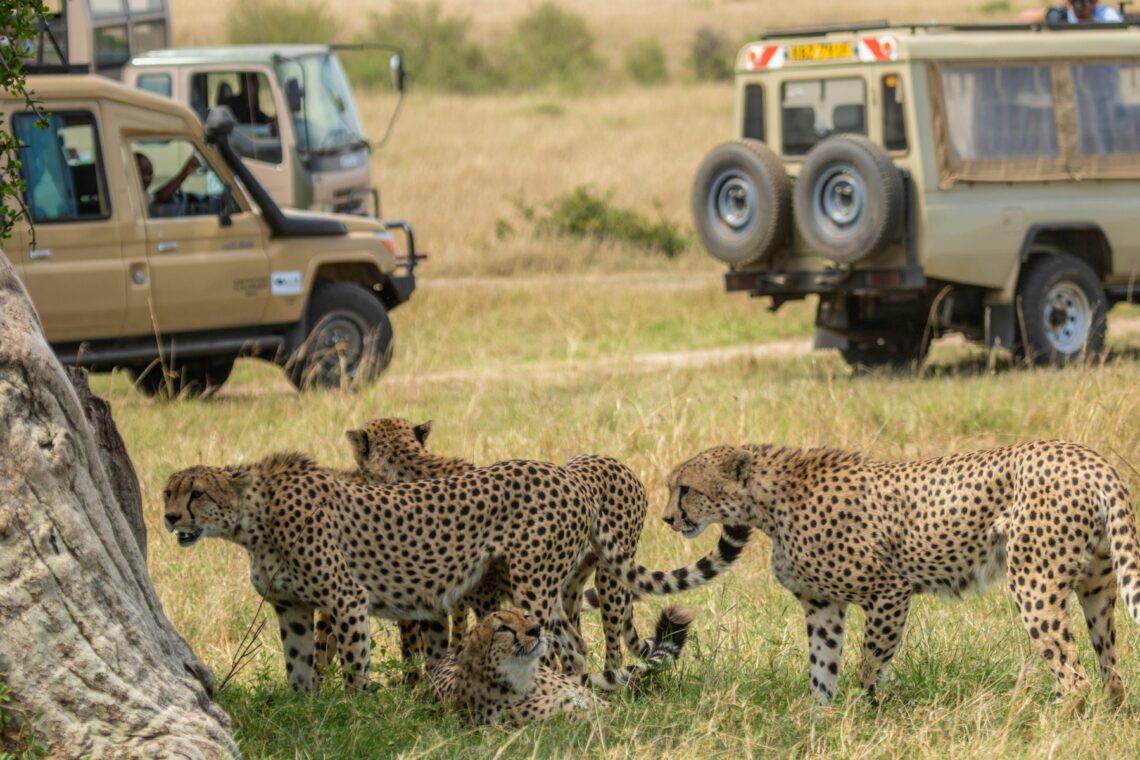
Creativity relies heavily on observation, yet modern life rarely permits sustained attention to anything. Safari restores this almost by accident. Wildlife encounters demand patience. Movement is subtle. Details matter enormously.
Watching animal behaviour encourages focus without agenda. There’s no predetermined story to impose, no image to capture on demand. You simply wait, notice patterns, respond to what unfolds in front of you.
This practice of quiet observation often mirrors the creative process itself, actually. You learn to sit with uncertainty. To trust timing. To recognise when to act and when to remain completely still.
Silence That’s Full of Something
Silence on safari isn’t empty. It’s layered – distant calls, wind moving through grass, the rhythm of unseen movement. This kind of auditory environment is profoundly grounding.
Without constant background noise filling every gap, thoughts become clearer. Silence stops feeling awkward and starts feeling supportive. Many creatives find this shift alone allows mental tension to ease considerably.
The experience often reframes silence entirely. From something that needs filling into something worth protecting.
A Proper Break from Comparison
Digital spaces encourage relentless comparison. Creative output gets measured publicly, success quantified instantly. Safari removes this feedback loop almost entirely.
In the absence of metrics, creativity returns to what it originally was – expression rather than performance. There’s no audience to impress, no algorithm to game. Work becomes personal again.
This detachment from comparison often sticks around afterwards. Many creatives report a renewed sense of confidence and direction after stepping away from that constant online evaluation.
Coming Back with a Shifted Perspective
The effects of a safari-based digital detox are rarely immediate or particularly dramatic. Instead, they unfold gradually over time. When you return home, you often notice subtle changes in how you engage with technology, consume information, and approach your work.
Perhaps more intentional screen use. Greater tolerance for quiet. A renewed appreciation for slow, focused creative sessions. Ideas that formed during safari often surface gradually, enriched by distance and reflection.
What it leaves behind is a recalibrated sense of balance rather than just a fleeting sense of escape.
A Different Kind of Reset
Safari doesn’t promise reinvention. It offers something quieter and arguably more valuable – a return to attention. By removing excess noise rather than piling on more stimulation, it creates conditions where creativity can reset naturally.
For creatives drowning in constant connectivity, this reset doesn’t come from doing more. It comes from allowing less. Less scrolling. Less documentation. Less urgency pressing on you constantly.
In the space that remains, ideas begin to breathe again. Shaped not by algorithms or external expectations, but by observation, stillness, and time.
Read more lifestyle and travel articles at ClichéMag.com
Images provided by Deposit Photos, BingAI, Adobe Stock, Unsplash, Pexels, Pixabay Freepik, & Creative Commons. Other images might be provided with permission by their respective copyright holders.