
Last Updated on September 8, 2026 by Cliche
Do you love rice so much that the thought of cutting it out makes any weight loss plan feel miserable? You can learn How To Eat Rice All Day And Be Skinny Safely without turning rice into the enemy or living on a harsh detox diet.
Rice is a source of starch and calories, but it can still fit a balanced diet. The real difference comes from your portion, what shares the plate with it, and whether your meals keep you full enough to avoid constant snacking throughout the day.
This guide gives you practical ways to keep rice in your healthy recipes, from choosing brown rice to building satisfying bowls with protein and vegetables used in new recipes.
How To Eat Rice All Day And Be Skinny Safely: Choosing the Right Type of Rice
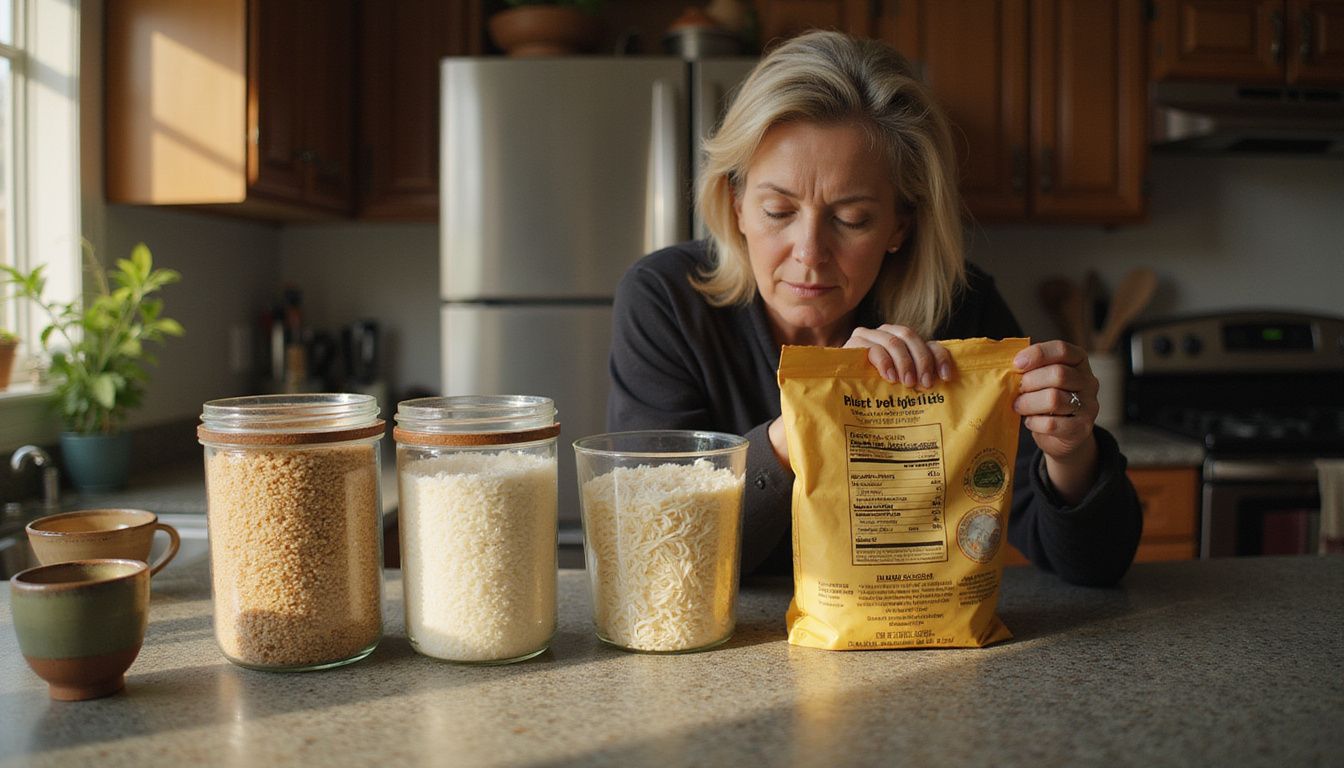
The best rice for weight management is the one you enjoy and can portion consistently. Brown rice, white rice, lower-glycemic varieties, and rice alternatives can all have a place, but they do different jobs on your plate.
If hunger hits soon after a rice-heavy meal, start with low-glycemic rice varieties or brown rice, then add protein and vegetables. That combination gives you more food volume and dietary fiber without making rice the entire meal.
Whole grain rice vs. white rice
Brown rice keeps its bran and germ, while white rice has those outer layers removed during milling. That means brown rice usually provides more dietary fiber, while white rice has a softer texture and may be easier to digest for some people.
USDA food data lists about 205 calories in a cup of cooked white rice. A cup can disappear fast in a large bowl, so the serving size matters more than whether your rice is white or brown.
| Choice | What it offers | Best use for weight management |
|---|---|---|
| Brown rice and other whole grains |
|
|
| White rice |
|
|
A helpful meal pattern is Ichiju-sansai style from Japan, which centers a meal on rice, soup, and several small side dishes. It gives rice a place at the table without making it the only food you eat.
Low-calorie rice alternatives like Shirataki rice
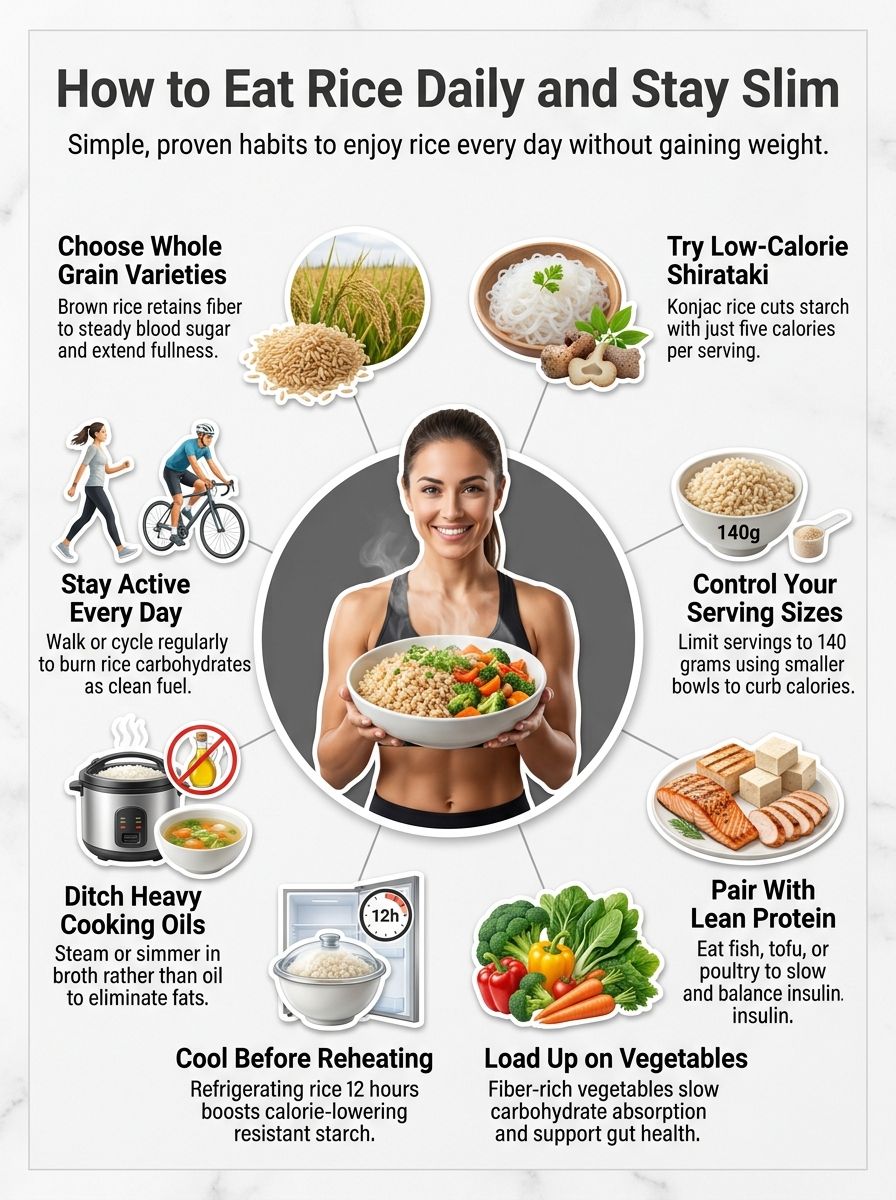
Shirataki rice is made from konjac, a root that contains glucomannan, a soluble fiber. It is not a direct replacement for fluffy cooked rice, but it can stretch a rice bowl when you want more volume with fewer calories.
Nutrition labels vary by brand, so check the package rather than trusting one fixed calorie number. Most shirataki products need a good rinse and a few minutes in a dry skillet after draining, which helps remove the mild packaged smell and gives the pieces a better texture.
| For a rice bowl | Cooked white rice | Shirataki rice |
|---|---|---|
| Texture | Soft, tender, and familiar | Springy and more noodle-like |
| Carbohydrates | Mostly starch | Usually very low in digestible carbohydrates |
| Best role | A measured base for a balanced meal | A volume booster or partial swap in a bowl |
Try a half-and-half bowl before replacing all your rice. Mix half cooked rice with half shirataki rice, then add seasoned chicken, shrimp, tofu, beans, or eggs plus a large serving of vegetables.
Rice does not need to disappear from your diet. It needs a sensible portion and good company on the plate.
Portion Control Strategies
Portion control lets you eat rice often without guessing your way through meals. A half cup of cooked rice is a common serving guide, and it is much easier to manage than a restaurant-sized mound.
The National Institute of Diabetes and Digestive and Kidney Diseases notes that the amount you eat matters as much as the food itself for reaching or maintaining a healthy weight. Measure rice for a week or two, and you may spot the bowls that quietly turn into two or three servings.
Standard serving sizes
Start with 1/2 to 1 cup of cooked rice at a meal, then adjust based on your hunger, activity, body size, and the rest of the plate. Half a cup is roughly the size of a rounded handful, while one cup is about the size of a baseball.
Use a dry measuring cup at home until you can recognize your usual serving. A small bowl can also help, since a wide dinner plate makes a modest scoop look smaller than it really is.
- For a lighter meal: Use 1/2 cup of rice, a palm-sized serving of protein, and plenty of vegetables.
- For an active day: Use up to 1 cup of rice if it fits your calorie needs and you still include protein and produce.
- For takeout: Set aside half the rice before you start eating, then save it for another meal.
- For meal prep: Pack rice in separate containers so one scoop stays one scoop.
Balancing rice with other foods
Rice feels far more satisfying when it is part of a balanced diet. Build your plate around vegetables and protein, then use rice as the starch that brings the meal together.
A simple visual guide works well: fill about half your plate with vegetables, one quarter with protein, and one quarter with rice or another grain. This gives you a larger meal without loading every calorie into one food.
| If your rice meal feels… | Try this fix |
|---|---|
| Too small or unsatisfying | Add broccoli, cabbage, spinach, mushrooms, peppers, or a broth-based soup. |
| Too high in calories | Keep the rice portion steady and cut back on creamy sauces, fried toppings, and large amounts of oil. |
| Hungry again soon after eating | Add protein such as chicken, fish, tofu, eggs, Greek yogurt, beans, peas, or lentils. |
Pairing Rice with Balanced Meals
Rice can be the comforting part of your meal while protein and vegetables do the heavy lifting for fullness. This is how you keep healthy eating realistic instead of treating every rice dish like a cheat meal.
Choose flavors you already love. A rice bowl with salsa and black beans, a stir-fry with tofu and vegetables, or salmon with rice and greens can all work for weight loss when portions fit your daily calories.
Incorporating lean proteins
Protein helps make rice meals stick with you. Add chicken breast, turkey, fish, shrimp, tofu, tempeh, eggs, beans, lentils, or edamame to slow down how quickly hunger returns.
A practical target is a palm-sized portion of protein at lunch and dinner. If you eat a mostly plant-based diet, combine beans or lentils with rice and vegetables for a filling, budget-friendly bowl.
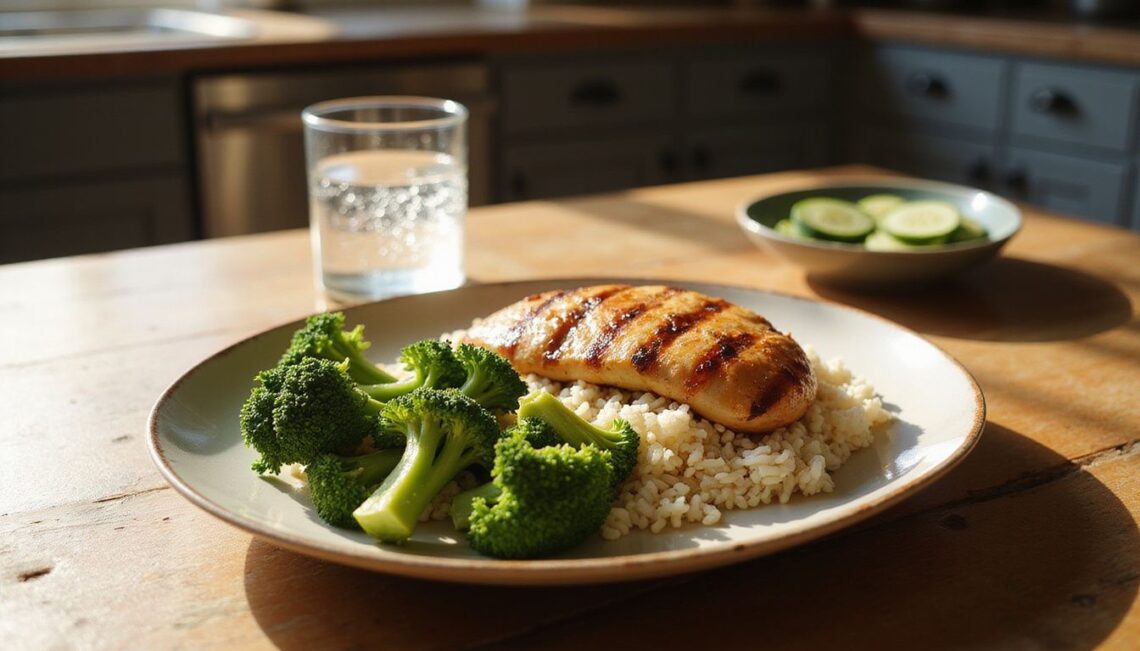
- Chicken and rice: Add roasted broccoli and a squeeze of lemon.
- Salmon and rice: Add cucumber, seaweed, and shredded carrots.
- Tofu and rice: Add bok choy, mushrooms, and a light soy-ginger sauce.
- Beans and rice: Add peppers, tomatoes, lettuce, and salsa.
Adding fiber-rich vegetables
Vegetables add bulk, color, vitamins, and dietary fiber with far fewer calories than an extra scoop of rice. Fiber also helps you feel full longer, which makes mindful eating easier.
The Centers for Disease Control and Prevention links fiber-rich eating patterns with digestive health and lower risk of chronic disease. For a rice lover, the useful takeaway is simple: make vegetables the biggest part of the bowl.
Keep frozen broccoli, green beans, mixed vegetables, cauliflower rice, or spinach on hand. They cook quickly and make it easy to turn leftover rice into a complete meal.
Cooking Techniques to Improve Rice’s Nutritional Value
How you cook rice changes more than taste. A few small habits can help with starch reduction, calorie awareness, and food safety.
Do not expect a cooking trick to cancel out a giant portion. Use these methods to support portion control, not to turn rice into a free food.
Creating resistant starch through cooling and reheating
When cooked rice cools, part of its starch changes into resistant starch, a type of carbohydrate that resists digestion in the small intestine. Research on reheated rice has found changes in resistant starch and reported greater fullness in study participants, though the effect is modest and varies by rice type and cooking method.
Use this trick because it can support a satisfying meal, not because it promises dramatic fat loss. Brown rice, parboiled rice, and firmer-grain varieties may be good options to test if you enjoy their texture.
- Cook rice as usual.
- Divide it into shallow containers so it cools faster.
- Refrigerate it within two hours of cooking.
- Reheat only the portion you plan to eat, then pair it with protein and vegetables.
The FDA advises keeping refrigerated foods at 40°F or below. Eat refrigerated leftovers within three to four days, and discard rice that sat out too long.
Using minimal oils and salt
Rice itself does not need much oil to taste good. A tablespoon of oil can add about 120 calories, so measure it instead of pouring it freely into the pan.
Use garlic, ginger, scallions, citrus, vinegar, chili, herbs, toasted sesame seeds, mushrooms, or low-sodium broth for flavor. These choices make simple rice dishes feel satisfying without burying the meal under heavy sauces.
- Steam or boil rice instead of frying it in oil.
- Use a nonstick skillet for fried-rice-style meals.
- Add vegetables before adding extra rice.
- Taste food before reaching for more salt or sauce.
Active Lifestyle and Its Role
Movement supports weight management because it uses energy, protects muscle, and can make a calorie deficit easier to maintain. You do not need to earn your rice with punishing workouts.
According to current federal physical activity guidance, adults should aim for 150 to 300 minutes of moderate activity each week, plus muscle-strengthening work on at least two days. Brisk walks, cycling, dancing, swimming, resistance bands, and body-weight exercises all count.
| Rice-loving routine | Why it helps |
|---|---|
| Take a 10- to 15-minute walk after a meal | It adds movement without making your day feel like a workout plan. |
| Strength train twice a week | It supports muscle while you work on weight loss. |
| Plan active breaks during long sitting days | Short bursts of movement are easier to repeat than one huge session. |
Track patterns, not perfection. If you enjoy rice at lunch and dinner, look at your weekly activity, sleep, hunger, and portions before blaming one food.
Conclusion
How To Eat Rice All Day And Be Skinny Safely starts with a more realistic goal: build habits that help you reach or maintain a healthy weight while still enjoying the food you love.
Keep rice portions measured, choose brown rice or other whole grains when you enjoy them, and use white rice with smart pairings. A half cup to one cup of cooked rice can fit many meals when vegetables and protein take up the rest of the plate.
For a lower-calorie option, try mixing shirataki rice with regular rice instead of forcing yourself into an all-or-nothing swap.
Cook extra rice if meal planning helps you, then refrigerate it promptly and use it within three to four days. Cooling and reheating may raise resistant starch a little, but it is still the portion and the full meal that matter most.
Skip crash diets and detox claims. If you have diabetes, kidney disease, digestive issues, an eating disorder history, or take medicines that affect blood sugar, ask a registered dietitian or health care professional for personal guidance.
You can keep rice on the menu. Serve it with protein, pile on vegetables, move your body in ways you enjoy, and let steady habits do the work.
Read more food articles at ClichéMag.com
Images provided by Deposit Photos, BingAI, Adobe Stock, Unsplash, Pexels, Pixabay Freepik, & Creative Commons. Other images might be provided with permission by their respective copyright holders including AI generators.