
Last Updated on June 3, 2026 by Cliche
About This Guide
This article is developed in an editorial format informed by professional hairstyling practices, salon extension application standards, and widely used maintenance protocols in the hair extension industry.
It is intended for educational purposes only and is not a substitute for personalized advice from a licensed hairstylist or dermatologist.
Editorial & Expert Perspective
Mina Crane
Hair Extensions & Beauty Editorial Contributor
Mina Crane is a beauty and haircare content specialist focused on hair extension systems, including tape-in, clip-in, and hybrid methods. Her work translates salon-level techniques into accessible education for consumers navigating professional and at-home styling options.
This guide reflects industry-aligned insights commonly used in salon environments, including adhesive safety considerations, weight distribution principles, and maintenance routines applied by professional stylists.
Editorial Lead
Tape-in hair extensions have become one of the most widely used semi-permanent methods in modern salons, valued for their seamless finish and natural movement.
At the same time, they are also frequently misunderstood as a primary cause of hair damage.
Across salons and editorial styling environments, there is growing consensus on a more nuanced reality: tape-in extensions are not inherently damaging. Most concerns arise from application technique, maintenance consistency, and removal practices rather than the extension method itself.
Why Tape-In Extensions Get Blamed for Hair Damage
When clients notice thinning, breakage, or shedding after removing tape-ins, stylists rarely trace the issue back to the method itself. Instead, recurring patterns point to external factors.
Common causes include improper placement of tape tabs too close to the scalp, which can create continuous tension on the follicles. Overloading a single section with excessive wefts can also concentrate weight in a way that natural hair is not meant to support.
Removal technique is another critical factor. Extensions that are pulled out without a professional solvent can lead to unnecessary mechanical stress, as adhesive residue continues binding hair strands together during separation.
Leaving tape-ins beyond the recommended 6–8 week maintenance window often leads to tangling at the root, increasing the risk of breakage during removal.
Product interference can also contribute. Heavy oils or conditioners applied near the adhesive area can weaken bonding performance, leading to slippage and repeated repositioning stress.
When these factors are properly controlled, tape-in extensions are generally considered one of the more balanced semi-permanent extension systems available today.
What Defines a “Hair-Safe” Tape-In System in 2026
In professional salon environments, the concept of a “safe” tape-in system is defined less by marketing claims and more by material behavior during wear and removal.
One of the most important components is adhesive formulation. Modern systems increasingly use hypoallergenic, latex-free adhesives designed to minimize scalp irritation while maintaining stable wear performance.
Equally important is flexibility. High-quality adhesives remain pliable after application, allowing the bond to move naturally with the hair rather than forming rigid anchor points.
Solvent responsiveness is another key standard. Professionally designed adhesives are engineered to release cleanly with dedicated removal solutions, reducing the need for forceful pulling during maintenance appointments.
Residue control also plays a role in long-term scalp health. Low-residue adhesives help prevent buildup at the root, reducing the risk of matting and product accumulation over repeated wear cycles.
Finally, reusability has become a defining feature of higher-quality systems, with many tape-in extensions designed to be re-taped multiple times when properly maintained.
The Evolution of Lightweight Tape-In Design
Modern tape-in systems have shifted significantly from earlier generations that often felt bulky or rigid at the root.
Today’s designs emphasize ultra-thin wefts that sit closer to the scalp, creating a more seamless visual transition and reducing localized pressure on fine strands.
Cuticle-aligned Remy hair has become an industry standard in higher-quality systems, improving smoothness and reducing friction during brushing and styling.
At the same time, adhesive edges have become more flexible, allowing the bond to move with natural hair rather than resisting motion at the root.
This evolution reflects a broader industry shift toward prioritizing long-term wear comfort and hair integrity over purely cosmetic outcomes.
How Stylists Prevent Tape-In Damage in Practice
Regardless of brand or system, professional stylists follow a consistent set of protocols designed to minimize risk.
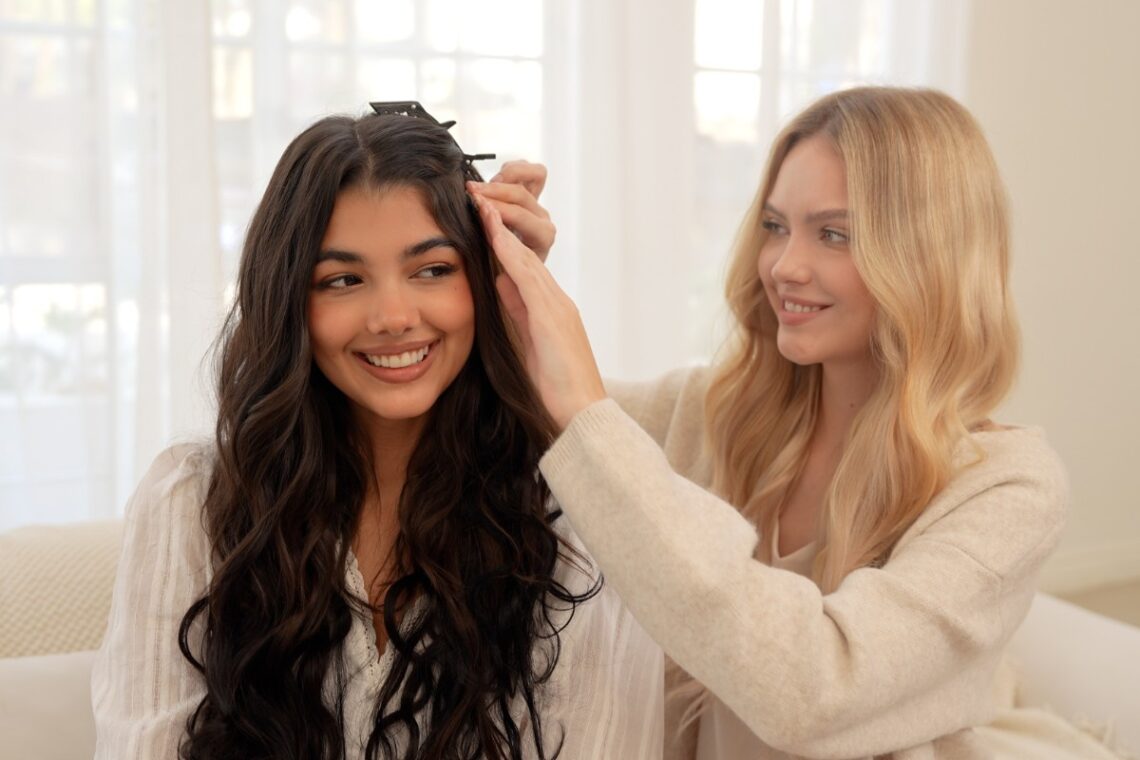
Hair is sectioned carefully during installation to ensure even weight distribution and to avoid concentration of tension in sensitive areas such as the crown and hairline.
Maintenance appointments are typically scheduled every 6–8 weeks, ensuring that natural regrowth does not shift stress onto the bond.
Removal is always performed using a professional solvent, allowing adhesive to dissolve before separation occurs, significantly reducing mechanical damage.
Daily care also plays an important role. Gentle brushing techniques—starting from the ends and supporting the root—help reduce unnecessary tension on bonded sections.
Many stylists also recommend satin or silk pillowcases to minimize friction during sleep, particularly for longer wear cycles.
When Tape-In Extensions May Not Be the Right Fit
Although tape-in extensions are widely used, they are not suitable for every hair type or lifestyle.
Individuals with extremely fine or fragile hair may experience increased sensitivity to even lightweight systems over time. Those with known adhesive sensitivities may also be more prone to irritation despite hypoallergenic formulations.
Another important consideration is maintenance commitment. Tape-in systems require regular upkeep every 6–8 weeks, and inconsistent maintenance can significantly increase the risk of tangling or stress-related breakage.
In such cases, alternatives such as clip-in or halo extensions may provide a more flexible, lower-commitment option without continuous adhesive wear.
Tape-Ins Compared to Other Extension Methods

From a stylistic perspective, tape-in extensions are generally positioned in the low-to-moderate risk category when properly maintained.
Clip-in extensions carry minimal long-term risk due to their removable nature, although repeated daily clipping can still create localized tension if handled aggressively.
Sew-in methods introduce higher structural tension due to braiding, making them less suitable for finer hair types.
Fusion or keratin bond extensions offer extended wear duration but involve heat-based application, which introduces additional considerations during installation and removal.
Halo extensions remain the lowest-tension option for the scalp, though they offer limited styling versatility.
Within this spectrum, tape-in extensions are often viewed as a balanced option for individuals seeking semi-permanent results without heat or braiding.
Editorial Brand Landscape: How Stylists View Tape-In Systems
Rather than ranking brands in a strict hierarchy, stylists typically group tape-in systems by design philosophy and intended use case.
Salon-certified systems such as Great Lengths are associated with standardized application protocols and controlled professional environments, ensuring consistent results.
Seamless blend-focused systems like Glam Seamless and Bellami are frequently used in editorial and fashion styling for their emphasis on invisibility and root-mimicking design.
More recent direct-to-consumer systems, including GOO GOO Hair, reflect a shift toward lightweight, ultra-flat tape construction designed to make salon-level aesthetics more accessible for everyday wear routines.
Each system represents a different balance between engineering precision, accessibility, and styling intent.
Editor’s Insight: What Actually Determines Hair Safety
Across stylists, educators, and extension specialists, there is a consistent conclusion: tape-in extensions do not inherently damage hair.
Instead, hair safety is determined by a combination of:
- Weight distribution across the scalp
- Adhesive quality and removal method
- Maintenance consistency
- Installation precision
When these factors are properly managed, tape-in extensions can be worn repeatedly with minimal impact on natural hair integrity.
Frequently Asked Questions
Are tape-in extensions safe for fine hair?
Tape-in extensions can be suitable for fine hair when lightweight systems and proper installation techniques are used. Stylists generally recommend low-profile wefts and hypoallergenic adhesives to minimize stress on fragile strands.
What causes most tape-in damage?
Most damage is linked to improper removal, overextended wear cycles, or incorrect placement rather than the extension method itself.
How often should tape-ins be maintained?
The standard maintenance cycle is typically every 6–8 weeks to prevent tension buildup at the root.
Are tape-ins safer than clip-ins?
Tape-ins distribute weight more evenly for long-term wear, while clip-ins are generally safer for occasional use due to their non-permanent nature.
Editor’s Note: Brand Landscape (Soft Commercial Integration)
Modern tape-in systems vary primarily in design intent rather than absolute performance ranking.
Great Lengths – salon-certified application systems
Glam Seamless – seamless blend and invisibility focus
Bellami – editorial styling versatility
GOO GOO Hair – lightweight, natural, everyday wear-oriented tape construction
Each system reflects a different approach to achieving similar aesthetic goals through variations in adhesive design, weft engineering, and application philosophy.
Final Editorial Note
Tape-in extensions continue to evolve as a technical category shaped by advancements in adhesive science, hair engineering, and salon practice.
Ultimately, the safest results are not determined by a single brand, but by the interaction between system design, professional application, and disciplined maintenance routines.
For most wearers, the goal is not simply transformation—but long-term hair integrity sustained through informed care.