
Last Updated on September 17, 2026 by Cliche
For a jewelry business, sourcing materials is rarely a one-time task. A new collection may start with a few sample beads, but developing it into a finished product can require chains, clasps, pendants, connectors, and other components. Once a design begins selling, the business may also need to reorder the same materials consistently.
This makes supplier selection about more than finding the lowest price. A useful wholesale jewelry supplier should be able to support different stages of the process, from testing new materials to producing and replenishing finished jewelry.
What to Look for in a Wholesale Jewelry Supplier
Before placing an order, buyers can compare suppliers across several practical factors:
|
Factor |
What to Check |
Why It Matters |
|
Product range |
Beads, findings, chains, pendants, finished jewelry |
Makes it easier to source related products together |
|
Wholesale pricing |
Unit price at different quantities |
Helps calculate actual material costs |
|
MOQ |
Minimum order quantity |
Determines whether the supplier fits your order size |
|
Material information |
Material, size, finish, specifications |
Helps evaluate product suitability |
|
Samples |
Sample or small-quantity orders |
Reduces the risk of buying unsuitable products |
|
Reordering |
Product codes and availability |
Makes repeat purchasing easier |
These factors should be considered together rather than separately. A supplier with a low unit price may not be economical if the MOQ is too high or shipping costs significantly increase the final cost.
1. Look for a Product Range That Fits Your Designs
A single jewelry design often requires several components. A necklace, for example, may include beads, a pendant, a chain, jump rings, and a clasp.
When these products come from different suppliers, buyers need to compare multiple catalogs, specifications, finishes, minimum orders, and shipping arrangements. It can also be harder to find matching components when a design changes.
A broader supplier can simplify this process. PandaHall, a China-based wholesale jewelry and craft supplies platform, offers categories including beads, gemstones, jewelry findings, chains, charms, pendants, and other accessories.
https://www.pandahall.com/?blog4-1
The advantage of a broad catalog is not simply having more products to choose from. It allows buyers to consider different parts of a design together and potentially consolidate more of their sourcing with one supplier.
2. Compare the Total Cost, Not Just the Unit Price
Wholesale pricing becomes more important when a material is used repeatedly across a collection.
For example, a small price difference between two similar clasps may seem insignificant when purchasing a few pieces. If the same clasp is used in hundreds of products, however, the difference can affect overall production costs.
A simple way to compare suppliers is:
Total sourcing cost = Product cost + Shipping cost + Other applicable cost
price at different quantities
- MOQ
- quantity discounts
- shipping costs
- expected material usage
The right order quantity depends on the product. A new design may be better suited to a small test order, while a proven bestseller may justify purchasing larger quantities.
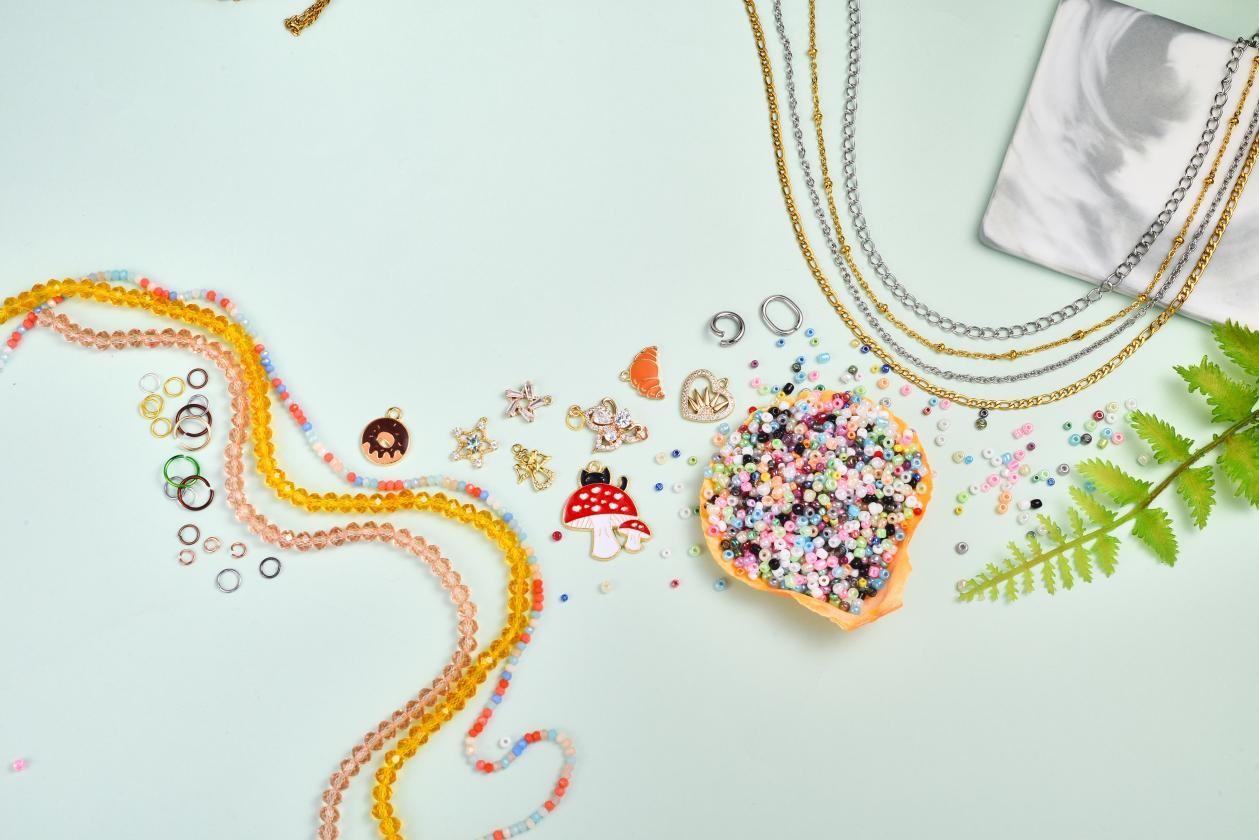
Jewelry designs often require multiple components, from beads and chains to clasps and pendants.
3. Check Material and Product Details Before Ordering
Product photographs cannot show every detail that matters during jewelry production.
For beads, buyers may need to check color, shape, surface finish, hole size, and natural variation. For metal findings, the base material, plating, dimensions, and finish can affect both appearance and durability.
These details become especially important when multiple components are used together. A clasp may not match the finish of a chain, or a pendant may be too heavy for a delicate necklace.
For products that come into direct contact with skin, buyers should also pay attention to relevant material and safety information. Depending on the product and target market, information concerning substances such as nickel, lead, or cadmium may be important. Where available, material-testing reports can provide additional support when evaluating sensitive materials.
For unfamiliar products, ordering samples before placing a larger order is often the simplest way to check whether they work for a particular design.
4. Consider Whether You Need Finished Jewelry Too
A business’s sourcing needs can change over time.
A jewelry maker may initially purchase loose beads and findings to create handmade pieces. As the business grows, it may also need ready-made necklaces, bracelets, earrings, or other finished products to expand its range or respond to demand more quickly.
Having access to both components and finished jewelry can provide more flexibility. Businesses can create original designs when they want greater control, while also selecting finished pieces when speed and convenience are more important.
PandaHall also offers wholesale finished jewelry alongside jewelry-making components, giving buyers the option to source different types of products through the same platform.
https://www.pandahall.com/wholesale-jewelry-watches/6.html?blog4-2
5. Think About Reordering Before a Product Becomes a Bestseller
Finding a suitable material is only the first step. Once a product becomes part of a regular collection, being able to reorder the same material can become just as important as its original price and quality.
Before relying on a particular component, buyers should keep a record of:
- product code
- material
- size
- color and finish
- supplier
- previous order quantity
It is also useful to check whether the supplier offers similar alternatives. If a popular clasp or bead becomes unavailable, having replacement options can reduce disruption to production.
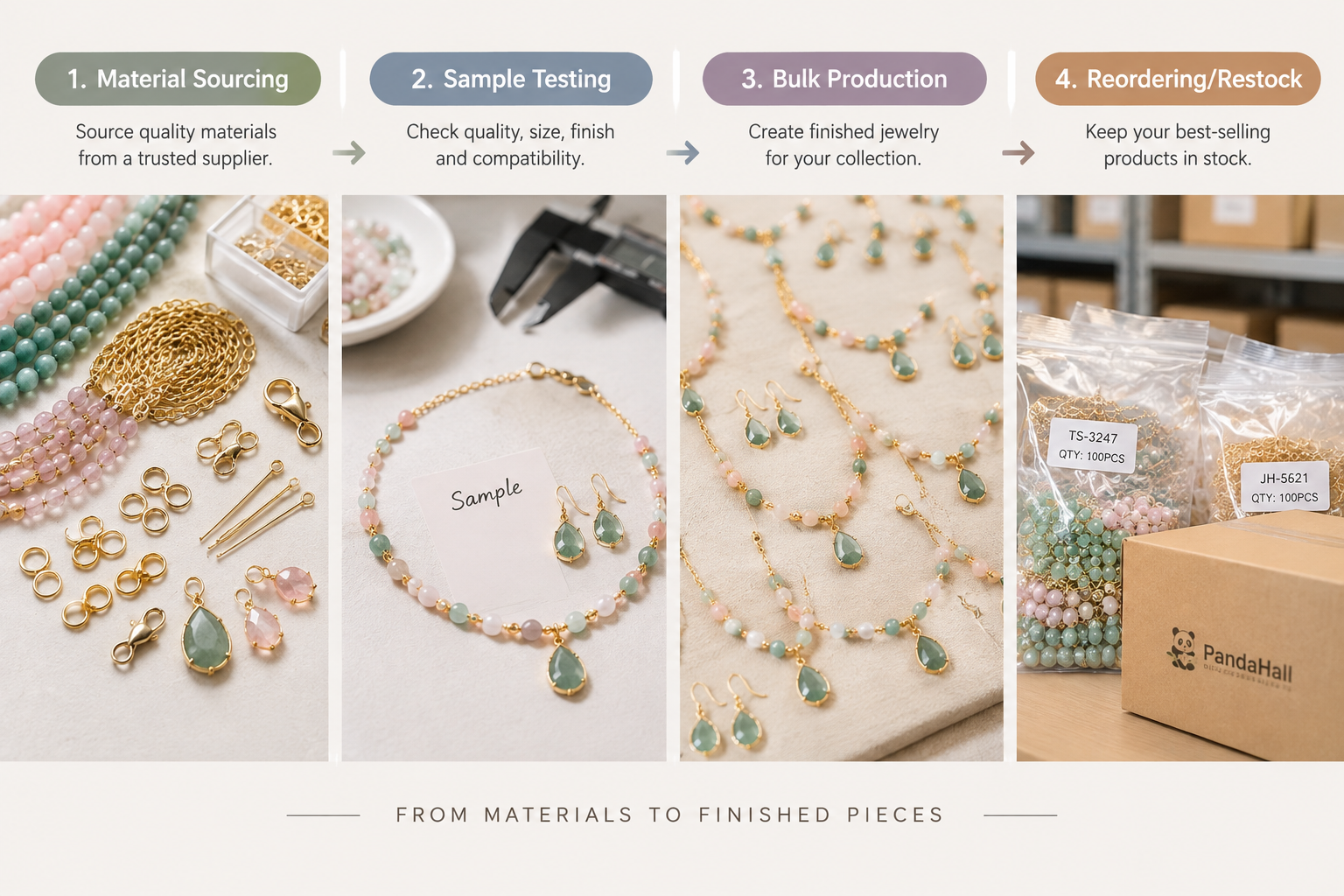
Consistent product specifications and reliable reordering can help businesses maintain established jewelry collections.
A Simple Supplier-Selection Process
For businesses comparing wholesale jewelry suppliers, a simple four-step process can make sourcing decisions more consistent:
1. Define your requirements
List the materials, quantities, specifications, and target costs you need.
2. Compare suppliers
Check product range, pricing, MOQ, shipping, material information, and available services.
3. Order samples
Test appearance, dimensions, finish, quality, and compatibility with your design.
4. Evaluate repeat ordering
For products that perform well, check whether the same specifications can be reordered and whether suitable alternatives are available.
This approach helps buyers evaluate suppliers based on their actual business needs rather than choosing based on price alone.
Frequently Asked Questions
What should I look for in a wholesale jewelry supplier?
Product range, pricing, MOQ, material information, sample availability, finished jewelry options, and reorderability are all useful factors to compare.
Is the cheapest jewelry supplier always the best option?
Not necessarily. The actual cost also depends on quantity, MOQ, shipping, and whether the product meets the requirements of the finished design.
Should I order samples before buying wholesale jewelry supplies?
For unfamiliar products, samples can help buyers check material, size, finish, appearance, and compatibility before committing to a larger order.
Why is reorderability important?
If a product becomes part of a successful collection, inconsistent availability can force a business to change its design or find and test a replacement. Easy reordering can make ongoing production more predictable.
Final Thoughts
Choosing a wholesale jewelry supplier is ultimately about finding a sourcing partner that fits the way a business operates.
Product variety, pricing, MOQ, material information, samples, finished products, and supply continuity all matter. The right combination depends on whether a business is testing new designs, producing established collections, or expanding its product range.
For businesses looking for a broad source of jewelry-making materials and related products, PandaHall provides a wholesale platform where buyers can explore components, develop designs, and source additional products as their needs change.
Read more jewelry articles at ClichéMag.com
Images provided by PandaHall, Deposit Photos, BingAI, Adobe Stock, Unsplash, Pexels, Pixabay Freepik, & Creative Commons. Other images might be provided with permission by their respective copyright holders including AI generators.