
Last Updated on April 9, 2026 by Cliche
Public speaker and accessibility consultant Catarina Rivera exudes self-assurance. But that wasn’t always the case. “I feel proud of who I am now,” she says. “As a disabled Latina woman, it’s taken me a long time to get here, so I relish my disability joy and my self-confidence. I think I shine the most when I’m radiating joy and when I’m in alignment with myself. I feel most joyful when I’m salsa dancing, having travel adventures, and having my tea times. People in my online community know that I love matcha and green tea, especially green tea from Japan. When I’m sharing my story and my expertise as a public speaker, speaking on stage or virtually, those moments are really joyful and exciting for me.”
She loves coming together in solidarity. “One of my favorite feelings as well is to be in community with other disabled people who get it. They just get it without us having to explain to each other. To connect with each other is just such a gift. This can also be a feeling that I get just from reading a book by a disabled author that can help me feel so seen and connected. Some of my favorite memoirs are by Haben Girma and Alice Wong. I have a memoir by Molly Burke that I’m looking forward to reading as well.
Disabled perspectives evolve and grow over the years, particularly with new diagnoses. Catarina’s life has intersected with multiple disabilities at various points. “It was really challenging for a long time for me to adapt to my disability identity. I have the experience of having just a separate journey with each of my disabilities, because even though I have Usher syndrome and that causes deaf-blindness, I was wearing hearing aids from a very young age, so I’ve always had a hearing disability. I never had a moment that felt like it was a diagnosis moment or something I have to adapt to or adjust to. It was just always how I was. But when I was 17, I was diagnosed with Usher syndrome and my vision disability was super new. So that was a journey to understand, to accept, to deal with. I didn’t feel part of the disability community until much more recently in my life. I didn’t grow up associating with the deaf community or being involved in any camps or learning ASL.”
Coming to terms with losing her vision was initially a painful adjustment. “I remember when I was diagnosed with my vision disability, I went through a journey that I like to describe as going through denial, to acceptance, to self-advocacy, and then public advocacy. When I was newly diagnosed, I didn’t want to talk about it. I felt like it was a tragedy. It was very sad for me and difficult emotionally, but eventually as I started to adjust and learn and meet other disabled people, I recognized that I could build a future with my blindness, that there were so many ways to adapt.”
Her grief softened as she began to understand new ways of navigating the world. “There was so much accessibility out there. I learned about a lot of technology and tools and met other blind people once I moved to New York, and that was wonderful. That helped me to accept and deal with my disability, and I got services. But then after that, everything went up another level once I started using a white cane. I resisted using a white cane for a while, and I think this is a super common experience for blind people. Once I did start using it, I became publicly disabled. There was no hiding that I was blind. And before that, people wouldn’t assume that I was blind. Even if I was moving really slowly or appeared confused at night, that was not an assumption that they would make. Most people don’t know that blindness is a spectrum and that there are lots of blind people out there who don’t use a guide dog or a white cane.”
Such a public declaration brought personal triumph. “Once I used my cane, it helped me develop a really strong voice because knowing that people would understand that I was blind, I felt that opened up a lot of conversations and a space for me to self-advocate more strongly. It was an opening that I started to use more and more and developed my self-advocacy muscle, and that really helped me with my confidence. That really helped me show up in the world in a more empowered way. I also felt more comfortable navigating on my own and all of those benefits of just having a tool. That led me to start sharing my story online, which I never intended to become a business. I just wanted to share my story and help others, but then I found that I loved what I was doing and it could be a career path for me, a business opportunity for me to start working for myself. And I took that and was able to grow my business as a speaker, consultant, and content creator, and now I’m about to celebrate five years as an entrepreneur with Blindish Latina. So that’s been incredible. I’m happy I can be an advocate, a role model for others, and a changemaker, especially with disability inclusion in organizations and workplaces.”
Advocacy matters because not everyone has a choice. “To me, activism feels more like community care. Showing up with my capacity to advocate on behalf of those with less capacity, those who might be struggling with internalized ableism or their disability identity or those who are ill or don’t have spoons. I also feel that activism and advocacy can be energizing. Using your voice for change, using your lived experience and the expertise that comes with that gives me, and I’m sure many others, a sense of purpose. It’s fulfilling, it’s meaningful and it’s something that we can control, we can do something with our voice. And I think that’s super helpful when we constantly are dealing with a world that’s not designed for us and we don’t have full human rights.”
Everyone accepts their disabled identity at their own pace. “Ableism and internalized ableism are very powerful. Give yourself grace and time. That’s what I would say. Work on how you can live the life you want with adaptations. I would say don’t limit your dreams. Accepting my disability and who I am has been a big part of just having confidence in showing up as I am. I view my disability as a positive part of me, as a part of me that is important. You can’t separate this out. It’s just always a part of me. It’s helped me to be more empathetic, more creative, more adaptable, more innovative.”
There is power within a found family! “If you’re struggling with your disability identity, I think it’s so important to connect with a broader disability community. Don’t just seek out communities with your specific disability. You can learn so much and you can feel so seen when you connect outside of your own. And that happened to me where I started following voices online like people who were wheelchair users, people with chronic illnesses, more people with different types of conditions. I just felt like it was so expansive, but also that we have so much in common and that community is really powerful. You can find communities online and in person and figure out what works for you. I think following people on social media, if you intentionally build your feed with strong disabled people living unapologetically, that can really help you to undo internalized ableism when you have those examples.”
To be disabled is to be resilient. “Disability pride is all about celebrating who we are without apology or shame and really centering our disability identity. I spent some time hiding my blindness, and I think today, just celebrating my full identity is such a personal victory and a community celebration too. I love the expressions of pride that I see from disabled voices every July. To me, disability pride is about visibility, joy, and resistance. We resist ableist messages that tell us we’re less than or not as worthy as non-disabled people. It’s also subversive. I’m sure some people will ask, ‘How can you be proud of your disability?’ And that’s very much from the non-disabled perspective. I’m proud of who I am, and that includes everything about me. It’s also about making space for the full range of emotions and experiences that come with being disabled..”
Catarina’s career is providing lots of new exciting opportunities! “I’m working on a book proposal that will be a guide to disability inclusion in the workplace. That’s a huge goal for me to have a resource out there on this topic that can accompany my speaking and my consulting. I’m continuing to offer virtual training, fireside chats, and keynotes to organizations on disability awareness, inclusion, and accessibility, and my hope is to continue that work and to amplify it. I also anticipate continuing to build my social media channels, and I have a particular focus on growing my YouTube channel, which is on accessible travel. That’s been a project of mine. In terms of events, I am going to Cannes Lions in June in France for the first time as I’m very excited to see what opportunities will open up and to meet people there.” New horizons await those eager to explore. Those with disabilities deserve every adventure imaginable.
Read more Interviews on ClicheMag.com
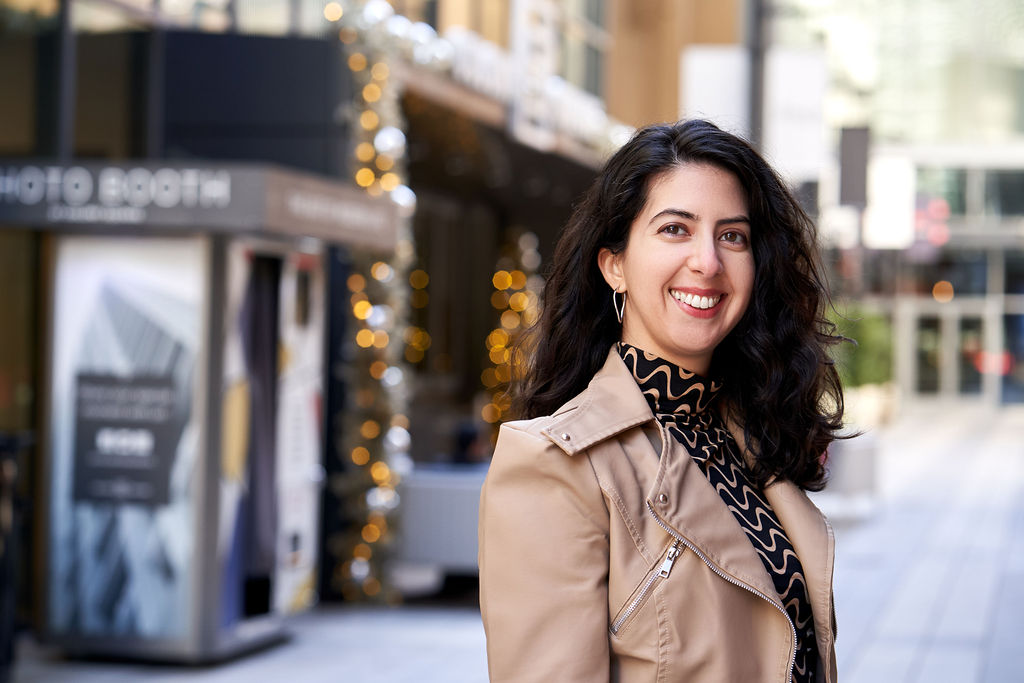
From Avoidance to Advocacy: Disabled Entrepreneur Catarina Rivera Reflects. Photo Credit: Courtesy of Catarina Rivera.