
Last Updated on February 2, 2026 by Cliche
Southern Europe holds its contrasts lightly. Grandeur and restraint, density and openness, flourish side by side without demanding comparison. Italy’s interior cities and Portugal’s Atlantic edge illustrate this balance particularly well. One turns inward, refining ideas over centuries. The other faces outward, shaped by wind, water, and departure.
Travelling between these regions is not about switching identities, but about recognising how culture responds differently to land. Art grows dense where history gathers. Space opens where horizons matter. Together, they form a conversation about how place shapes expression — and how beauty can emerge through entirely different instincts.

Where Art Organises Life in Florence
Florence does not overwhelm through scale. It persuades through proportion. Streets align with intention. Buildings feel measured, as though nothing was added without consideration of what already existed.
Renaissance art here is not isolated in galleries alone. It lives in façades, courtyards, and civic spaces that continue to serve daily routines. The city feels edited rather than accumulated — each element refined through repetition and reuse.
What stands out most is how seamlessly art integrates into ordinary movement. You pass masterpieces on the way to errands. You cross history without ceremony. Florence treats cultural inheritance as structure, not spectacle.
For many travellers drawn to Italy tours, this intimacy becomes the defining experience. Art is not something you visit; it’s something you move alongside.
Skill Passed Through Practice, Not Display
Florence’s legacy survives through doing. Workshops still operate. Techniques repeat quietly. Craft remains useful, not symbolic.
This continuity keeps heritage grounded. Art is respected because it works — because it shapes objects, spaces, and habits that still matter. The Renaissance here feels less like a finished chapter and more like a method that never stopped being applied.
Time deepens meaning rather than distancing it.
Leaving the Interior, Opening the Horizon
Moving away from Italy’s heartlands introduces a gradual loosening. Density thins. Attention shifts outward. The transition doesn’t feel like loss — it feels like release.
As art gives way to air and land, the cultural emphasis changes. What was contained becomes expansive. The conversation with history continues, but it speaks differently.
This shift prepares you for Portugal’s coast, where the landscape sets the tone more decisively than architecture ever could.
Edge and Exposure Along Portugal’s Atlantic Coast
Portugal’s western edge behaves with confidence. Cliffs meet the Atlantic without hesitation. Wind shapes sound. Light arrives unfiltered, often changing within minutes.
The coast does not decorate itself. It presents what is necessary — rock, water, sky — and allows everything else to adapt. Settlements remain practical. Life faces outward, oriented toward movement rather than enclosure.
For travellers exploring tours to Portugal, this openness often feels clarifying. There is less to interpret, more to experience directly.
Villages Shaped by Wind and Water
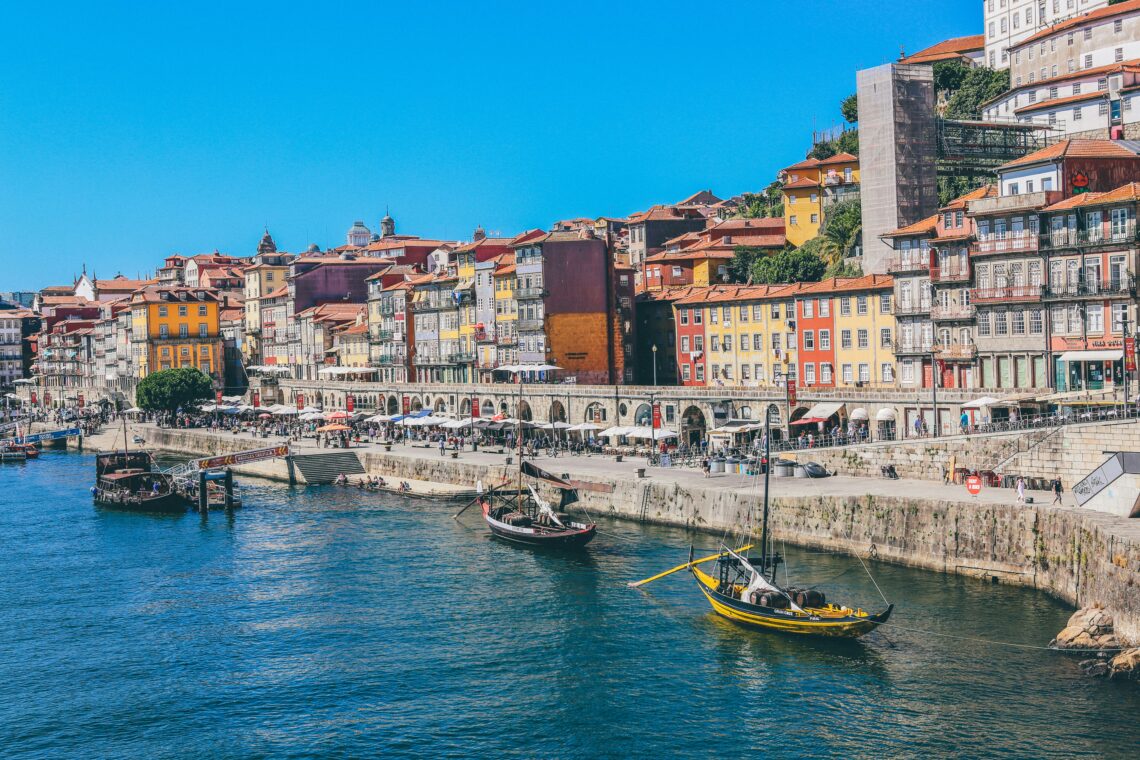
Along the Atlantic, Portuguese villages feel provisional in the best way. Buildings respond to exposure rather than aesthetics. Streets curve for shelter. Colour appears where it serves visibility.
There is little excess. What remains does so because it works. Beauty emerges incidentally — a line of houses against a changing sky, a path worn smooth by repetition.
The coast rewards attention rather than planning. You stop often, not because you were told to, but because the land insists.
Two Cultures, One Understanding of Time
What unites Italy’s interior cities and Portugal’s coast is their relationship with time. Neither rushes. Neither explains itself unnecessarily.
Italy refines through return. Portugal endures through exposure. One builds inward, the other outward. Both understand that meaning accumulates slowly, through familiarity rather than novelty.
This shared patience creates coherence where difference might otherwise dominate.
Art and Nature as Equal Forces
In Florence, art organises space. On the Atlantic coast, nature does the same. In both places, human presence responds rather than commands.
This humility keeps environments balanced. Cities don’t sprawl without logic. Villages don’t overreach their terrain. Culture survives because it listens.
The result is not sameness, but compatibility — different expressions shaped by respect for context.
Movement Without Disruption
Travel between these regions reinforces their connection rather than their contrast. Journeys feel like extensions, not interruptions.
You leave one rhythm and enter another without rupture. The interior prepares you for the edge. The edge reframes what came before. Understanding builds through motion rather than comparison.
This continuity makes the experience feel whole rather than fragmented.
Why These Landscapes Belong Together
Renaissance art and Atlantic cliffs may seem unrelated at first glance. One is human-made, precise, deliberate. The other is elemental, shaped by forces beyond control.
Yet both reflect the same instinct: to work with what is given. To refine rather than replace. To allow beauty to emerge through adaptation.
Italy’s heartlands and Portugal’s coast tell complementary stories about how culture survives — not by insisting on dominance, but by responding intelligently to place.
A Journey Defined by Balance
Exploring these regions together reveals a broader truth about Southern Europe. Its strength lies not in uniform identity, but in the confidence to differ without fracture.
Between carved stone and carved cliffs, art and nature offer parallel lessons. Both reward attention. Both resist haste. Both remain meaningful because they are allowed to age alongside the people who live with them.
And somewhere between Renaissance streets and Atlantic horizons, travel becomes less about contrast and more about recognition — of how different landscapes can express the same enduring commitment to balance, patience, and presence.
Read more lifestyle and travel articles at ClichéMag.com
Images provided by Deposit Photos, BingAI, Adobe Stock, Unsplash, Pexels, Pixabay Freepik, & Creative Commons. Other images might be provided with permission by their respective copyright holders.