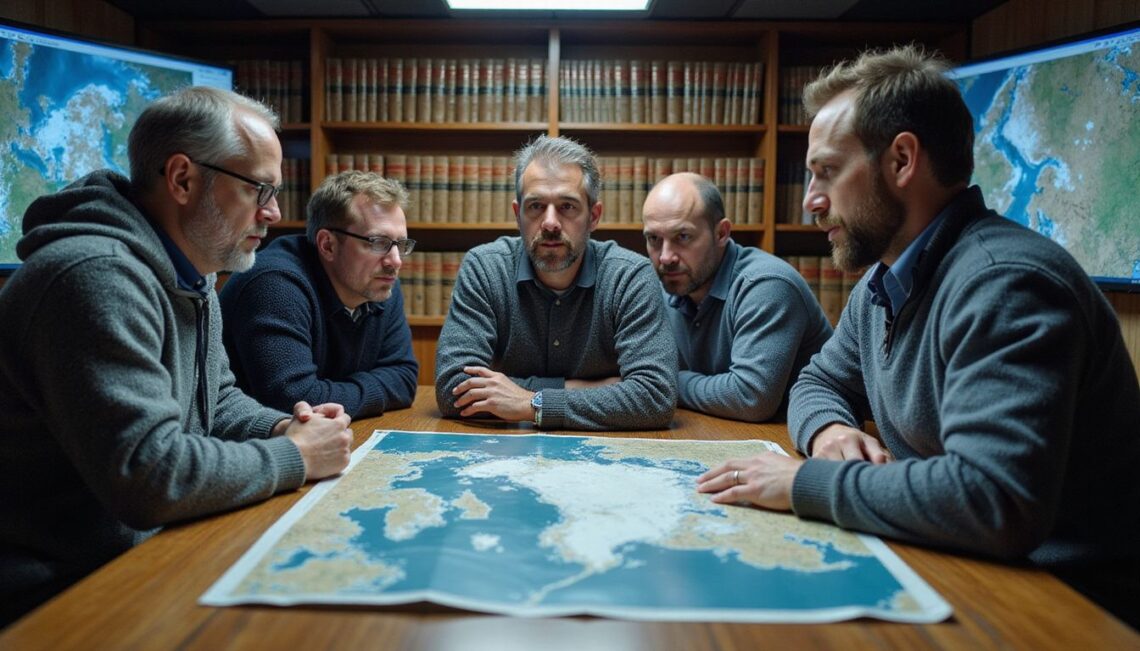

Many people wonder why the U.S. keeps talking about Greenland, or why American leaders like Donald Trump even thought about buying it. Maybe you have heard news stories about the Arctic region, new shipping routes opening up due to climate change, or struggles over rare earth minerals in Greenland.
It can be hard to keep track of what matters and who is involved.
One interesting fact is that Greenland sits right between North America and Europe, near key places like the GIUK Gap and Pituffik Space Base. This spot helps control important shipping lanes such as the Northwest Passage.
This blog will explain why Greenland is important for U.S. foreign policy and national security goals. You will see how its location affects Arctic geopolitics, natural resources, military activities by Russia and China, and even things like global warming.
Key Takeaways
- Greenland has an important location near the Arctic Ocean, between North America and Europe. It plays a role in controlling shipping lanes like the Northwest Passage and GIUK Gap. These routes could account for up to 5% of global shipping traffic by 2050.
- U.S. military bases such as Pituffik Space Base (Thule Air Base) are located in Greenland. These sites support missile warning, space missions, and airspace defense against Russia or China. The base had about 6,000 troops during the Cold War, but only around 150 remain as of 2025.
- Greenland contains rare earth minerals used in smartphones, electric cars, wind turbines, radars, missiles, and fighter jets. Only two mines operate now: gold and anorthosite for rare earth elements. Control over these resources reduces America’s reliance on China, which currently provides most supplies.
- Russia is increasing its activities in the Arctic with warships passing near the GIUK Gap after invading Ukraine; Denmark increased defense spending by kr.14.6 billion due to this threat since 2018 when the U.S. reactivated its Second Fleet for arctic security.
- China is attempting to connect with new “Polar Silk Road” shipping lanes through investments in airports and mining but is prevented by Denmark from gaining influence in strategic areas; this keeps U.S., Danish, and NATO forces positioned to counter actions from both Russia and China as melting ice shifts sea access each year.

Greenland’s Strategic Importance
Greenland sits near the Arctic Ocean, making it a key spot for U.S. military and NATO operations such as at Pituffik Space Base and Thule Air Base. Its location helps control the GIUK Gap, one of the main routes between Russia’s northern fleet and the Atlantic Ocean.
Key location for Arctic shipping routes
Ships crossing the Arctic now look for shorter trips between Asia and Europe. Melting ice has opened new passages, like the Northwest Passage, which can save days compared to sailing through the Panama Canal.
This change could move up to 5% of all global shipping traffic by 2050 toward Arctic routes. The Polar Silk Road connects into these paths too, drawing interest from big powers.
Greenland sits near the GIUK Gap, a key naval choke point linking the Atlantic Ocean with the Arctic. Control over this spot helps NATO stop adversaries, including Russian navy or northern fleet forces, from moving undetected between oceans.
The island’s location puts it at a crossroads for U.S., Chinese, and Russian ambitions in arctic security and trade growth as climate change shapes old boundaries.
Enhanced U.S. military presence in the Arctic
Pituffik Space Base in Greenland once had 6,000 U.S. troops during the Cold War. Now, about 150 remain as of 2025. This base supports space missions and missile warning systems, which help defend against threats from places like Russia or China.
Losing access to Pituffik could damage these operations considerably.
Military drills such as Exercise Strikeback and Northern Viking focus on guarding the GIUK Gap and North Atlantic seas. The U.S. wants stronger airspace surveillance near Greenland, too; NORAD and RAND have discussed bringing Greenland under NORAD’s watch for improved arctic security.
The Biden administration has plans for future expansion there, like building a new port in Greenland to assist U.S. forces and monitor increasing Russian military activity after Russia’s invasion of Ukraine.
These actions help protect NATO allies, control important sea routes such as the Northwest Passage, and respond quickly if tension increases in the Arctic region due to climate change or global warming opening up new shipping lanes.
Access to Natural Resources
Greenland contains a large supply of rare earths and other important minerals, making it significant to U.S. industry and national security. As global warming changes the Arctic, these resources are becoming easier to access, attracting attention from Washington to Beijing.
Rich reserves of rare earth minerals
Rare earth minerals are important for high-tech gadgets, wind turbines, and military gear. Only two mines operate in Greenland as of 2025: gold and anorthosite. Anorthosite can provide rare earth elements, making these rocks important for the future.
These critical minerals supply things like smartphones, electric cars, missiles, radars, and fighter jets.
China controls most of the world’s rare earth market today. In past years, Beijing tried to use this control against the U.S., which shows why Greenland’s stores matter so much. Denmark built new airports in Nuuk and Ilulissat with its own funds to keep China away from mining projects here.
The fight over these resources connects to U.S.-China trade sanctions and Arctic security concerns too. Gaining access to Greenland’s rare earths could make America less dependent on China while strengthening national defense under NATO agreements.
Countering Global Influence
With Russia relocating warships and China advancing its Belt and Road Initiative in the Arctic, the U.S. faces strong competition for control over shipping lanes like the Northwest Passage—discover how Greenland plays a role in this global struggle.
Addressing China’s and Russia’s Arctic expansion
Russia is making a strong push into the Arctic. It now controls about 25% of its land in that region and continues to expand its military presence. Russian naval ships travel through the northwest passage and near the Greenland-Iceland-United Kingdom (GIUK) Gap, close to Greenland.
This location allows them to monitor NATO’s movements and threaten North Atlantic shipping routes. Denmark is spending over kr.14.6 billion more on defense as a direct reaction to Russia’s actions following Russia’s large-scale invasion of Ukraine.
The United States reactivated its Second Fleet in 2018 to address these threats in the North Atlantic and maintain arctic security.
China has significant plans as well; it calls its initiative for new shipping paths the “Polar Silk Road.” Chinese companies attempted to invest in airports, mining rare earth elements, and other projects in Greenland but were stopped by Danish leaders concerned about foreign control.
China already holds between 40%-90% of global critical minerals like rare earth minerals needed by tech companies and militaries everywhere. If it secures more influence in places such as Greenland or Nunavut, Canada, its control over western supply chains could increase even more.
The U.S., with bases such as Pituffik Space Base and support from joint arctic command forces like Sirius Dog Sled Patrols, works closely with Denmark and NATO allies to keep their advantage over both Russia and China anywhere above the Arctic Circle—especially as climate change causes new sea lanes to become accessible each year with the melting ice.
Conclusion
Greenland holds a special spot for U.S. interests, sitting close to new Arctic shipping lanes. Its land is packed with rare earth minerals, important for electric cars and clean energy.
The Pituffik Space Base helps keep an eye on the northwest passage and strengthens arctic security. With rising global warming, these concerns only grow as ice melts and sea routes open up fast.
For the U.S., Greenland stands at the center of national defense, science, and future growth in a changing world.
Read more political articles at ClichéMag.com
Images provided by Deposit Photos, BingAI, Adobe Stock, Unsplash, Pexels, Pixabay Freepik, & Creative Commons. Other images might be provided with permission by their respective copyright holders.