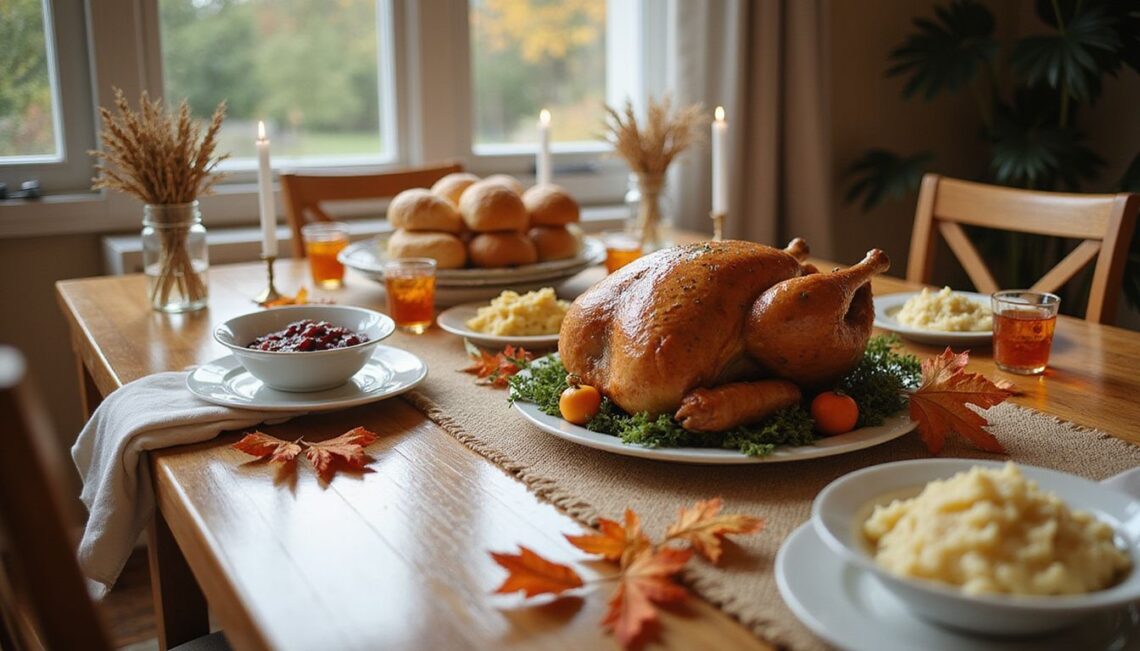

Do you ever sit down at the dinner table on the fourth Thursday of November and honestly ask yourself what this day is really about? For most of us, it’s a blur of airport lines, timing the turkey just right, and checking scores between servings.
But beyond the delicious chaos of the Thanksgiving holiday, there is a quieter, more powerful purpose waiting to be found. I used to treat this week as just a hurdle between Halloween and Christmas. Then I discovered that digging a little deeper into the history—and the science—of gratitude could change the entire experience.
In this guide, I’ll walk you through the real roots of Thanksgiving Day and share practical ways to make it meaningful again. From the specific history of the Pilgrims to modern tips for giving back, let’s explore how to make this year different.
Key Takeaways
- Historical Roots: The tradition began with the 1621 harvest festival at Plymouth Colony, but it was Sarah Josepha Hale who campaigned for 17 years to make it a national holiday, which Lincoln finally proclaimed in 1863.
- Science of Gratitude: Research from UC Berkeley’s Greater Good Science Center shows that practicing gratitude can lower blood pressure and improve heart health, making it a physical benefit as well as an emotional one.
- Travel & Trends: AAA projects nearly 80 million Americans will travel for the holiday in 2025, making patience and planning essential for family gatherings.
- Giving Back: You can turn gratitude into action by volunteering with organizations like Feeding America or participating in “Turkey Trots,” which are now the biggest running events of the year.
- Biblical Context: Many traditions are rooted in scripture, with verses like 2 Corinthians 9:6-7 encouraging joyful giving.

Gratitude and Reflection
Thanksgiving Day often forces us to hit the pause button on our busy lives. While the football games and parades are fun, the real magic happens when we stop to appreciate the safety, food, and people around us.
Acknowledging life’s blessings
The harvest festivals we celebrate today have deep historical roots. The famous 1621 gathering at Plymouth Plantation wasn’t just a party; it was a survival celebration. The Pilgrims and the Wampanoag people came together to share the fruits of a hard-won harvest, a tradition that echoed earlier “days of fasting” and prayer common in England.
Today, science backs up what those early settlers felt instinctively. A study by the Greater Good Science Center at UC Berkeley found that people who regularly practice gratitude report stronger immune systems, lower blood pressure, and higher levels of positive emotions.
It turns out that counting your blessings isn’t just a nice sentiment; it’s a health strategy. Whether you are celebrating Canadian Thanksgiving (Action de grâce) in October or the American holiday in November, the act of giving thanks changes your brain chemistry.
Reflecting on personal growth and relationships
The holiday is also a natural milestone for measuring how far we’ve come. When you sit down for Thanksgiving dinner, you aren’t just eating turkey; you are marking the passage of another year.
I encourage you to look for the “micro-wins” from the past twelve months. Did you survive a tough project? Did you mend a relationship? These small victories are often overlooked in the rush of Black Friday sales.
Our relationships are central to this reflection. For many families, this season is guided by faith and scripture. The command in Ephesians 6:2 to honor your parents is a cornerstone for many gatherings, reminding us that family bonds require respect and effort to maintain.
Try this simple “Three Good Things” practice at your table:
- Step 1: Ask everyone to write down three specific things that went well this year.
- Step 2: Have them explain why they think it happened (e.g., “I got the promotion because I worked late,” or “I felt better because my sister called me”).
- Step 3: Share these aloud before dessert. It shifts the conversation from complaining to appreciation instantly.
Family and Togetherness
If your house is anything like mine, the “peace” of Thanksgiving is often interrupted by the roar of a football game or the clatter of pots in the kitchen. That noise is actually a good sign—it means people are together.
Strengthening bonds with loved ones
The sheer effort people make to be together is staggering. According to AAA projections for 2025, nearly 80 million Americans will travel 50 miles or more to be with family this Thanksgiving. That is a record-breaking number of people hitting the roads and skies just to share a meal.
This massive migration proves that despite the stress and the cost, we crave connection. In an era where we often text instead of talk, sitting face-to-face for a long meal allows us to reconnect on a deeper level.
Even if you can’t be with everyone in person, technology has bridged the gap. Video calls have become a staple for many, allowing grandmothers to see the turkey carving even from states away.
Sharing traditions and creating memories
Traditions are the glue that holds these gatherings together. While turkey remains the centerpiece for 88% of households, many families are creating new customs that fit their modern lives.
One of the fastest-growing traditions is the “Turkey Trot.” According to RunSignup, Thanksgiving is now the biggest running day of the year in the United States, with over a million people participating in local 5K races before they indulge in the feast. It’s a fantastic way to burn off energy and do something active together before the food coma hits.
Of course, food traditions are still king. Debates over stuffing versus dressing or canned cranberry sauce versus fresh are part of the fun. These small arguments and rituals create a shared history that belongs only to your family.
| Tradition | Why It Works | Modern Twist |
|---|---|---|
| The Big Meal | Centers connection around a shared sensory experience. | Potluck style: Assign specific dishes to reduce host stress. |
| Watching Football | Provides a low-pressure way to bond and cheer together. | Host a family “touch football” game during halftime. |
| The Turkey Trot | Builds camaraderie and releases endorphins before a heavy meal. | A simple neighborhood walk after dinner if a 5K is too much. |
Community and Giving Back
While we focus on our own tables, it is vital to look outward. Thanksgiving is arguably the most charitable time of year, with millions of Americans turning their gratitude into action.
Acts of charity and supporting others
The need is real. Feeding America reports that over 47 million people in the United States face hunger, including millions of children. For them, a Thanksgiving dinner isn’t guaranteed.
This reality drives many to volunteer. Organizations like Operation Turkey mobilize thousands of volunteers to cook, plate, and deliver hot meals to the homeless and less fortunate on Thanksgiving morning. It is a powerful reminder that “giving thanks” is a verb.
This spirit of generosity is also deeply scriptural. The Bible encourages us to share our abundance, with passages like 2 Corinthians 9:6-7 calling people to give joyfully. This verse reminds us that generosity shouldn’t be a chore, but a celebration of what we can do for others.
If you can’t volunteer time, financial support is just as impactful. Giving Tuesday, which takes place the Tuesday after Thanksgiving, has become a global movement. In 2023 alone, donors in the U.S. gave an estimated $3.1 billion to nonprofits on this single day.
Whether you drop off canned goods at a local drive or donate online, these acts ensure that the spirit of the holiday extends beyond your own front door.
Conclusion
Thanksgiving Day is so much more than just a pre-game show for the Christmas season.
It is a rare opportunity to pause, reflect, and actively appreciate the people and privileges in our lives. While George Washington made the first proclamation, we often forget the “Godmother of Thanksgiving,” Sarah Josepha Hale.
She was a writer and editor who lobbied for 17 years to make Thanksgiving a national holiday, believing it would help heal a divided nation. Her persistence reminds us that this day was always meant to bring people together, regardless of their differences.
Experts from the American Psychological Association suggest that to make the holiday truly fulfilling, we should focus on “psychological presence”—being truly there in the moment, rather than worrying about the perfect pie or political arguments.
So this year, I challenge you to look beyond the turkey. Start a gratitude journal, run a 5K with your cousins, or serve a meal to a neighbor in need.
When you make gratitude an action, you’ll find that the holiday creates memories that last far longer than the leftovers.
Read more holiday and Thanksgiving articles at ClichéMag.com
Images provided by Deposit Photos, BingAI, Adobe Stock, Unsplash, Pexels, Pixabay Freepik, & Creative Commons. Other images might be provided with permission by their respective copyright holders.